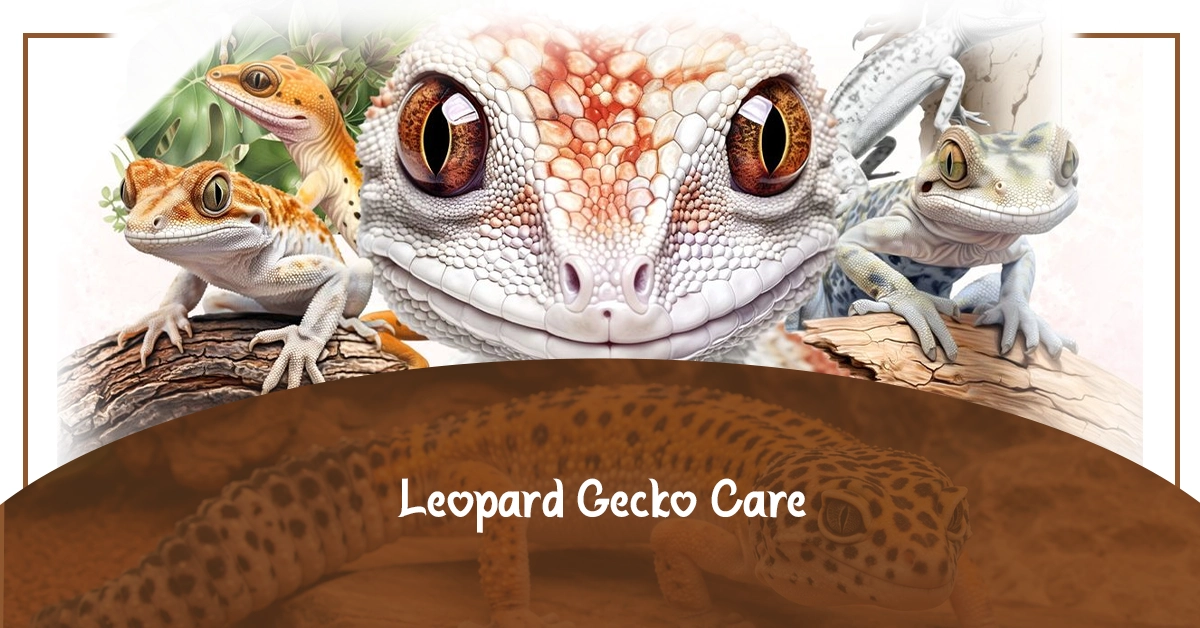

Leopard geckos make excellent pets for first-time pet parents. They are docile, friendly, small, and easy to handle. They are mostly found in South Asia, including countries like Pakistan, Afghanistan, and parts of Iran.
If you are thinking of keeping this adorable reptile as your pet, you should know how to care for it. This guide explains everything related to leopard gecko care, including enclosure setup, diet, nutrition, shedding, handling, and health, for a happy, thriving pet.
TL;DR
- Proper setup with the right temperature gradient, humidity levels, and substrate is important for a leopard gecko’s health and longevity.
- Giving gut-loaded insects and correct calcium and vitamin dosages helps prevent serious diseases in geckos, such as metabolic bone disease.
- The best indicators for your gecko’s health are appetite, shedding, and tail fat.
- Regular feeding, cleaning, and vet visits ensure that your reptile pet lives a long and healthy life.
Enclosure Setup
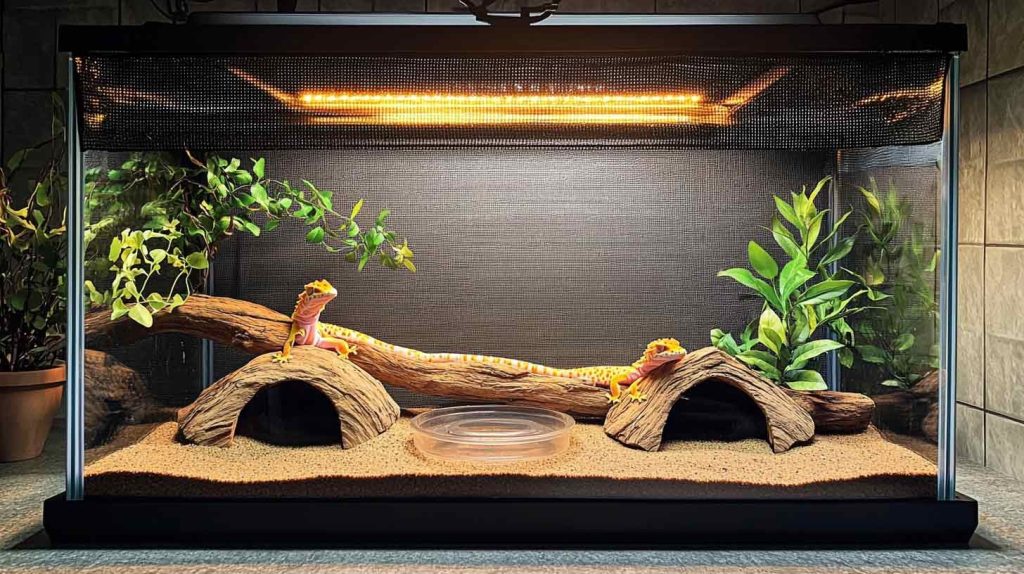
For juvenile leopard geckos, you need a minimum of a 10-gallon tank, and for adult ones, you need a 20-gallon tank. Change the size as your pet grows. Make sure to get the enclosure with a secure, screened lid. It will prevent your pet’s escape, provide ventilation, and keep cats and dogs (if you have any) at bay.
Temperature
Just like other reptiles, leopard geckos are ectotherms. This means that they depend on the external temperature to regulate their body temperature. The ideal temperature gradient in their enclosure should be 80 to 90°F for the basking area or warm end and 75 to 80°F for the cool end. Monitor the temperature using thermometers.
Lighting
In nature, leopard geckos are nocturnal. However, according to studies, pet leopard geckos need UV light to synthesize vitamin D and absorb calcium, both of which support bone health.

Provide 10 to 12 hours of UV every day. Make sure to replace the UV bulb every 6 months as its performance starts declining. Moreover, you can also use a ceramic bulb, an under-tank heater, or an incandescent bulb for heat. However, do not use hot rocks as they get extremely hot and can burn your pet if it sits on them.
Humidity
Humidity is important for leopard geckos. They tend to retain shed skin around their eyes and their toes if the humidity levels are low. Retaining shed skin causes issues, such as difficulty seeing prey or constricted blood flow.
Place a shallow water dish for your gecko to soak in. Moreover, give it a humid hide, where it can shed easily. The humid hide should be placed in the warmer end of the habitat and filled with sphagnum moss. Keep checking the moss to prevent mold.
The overall humidity level of the tank should be lower than 50%. Monitor and maintain this level using a humidity gauge. Otherwise, your pet can develop respiratory tract and skin infections.
Substrate
Provide your pet with a commercially available substrate or a reptile carpet. Do not use wood chips, gravel, or walnut shells, as they can injure the reptile. If you are using sand as bedding, feed your gecko from a dish to avoid substrate ingestion. It can cause life-threatening gastrointestinal tract obstructions.

Decor and Accessories
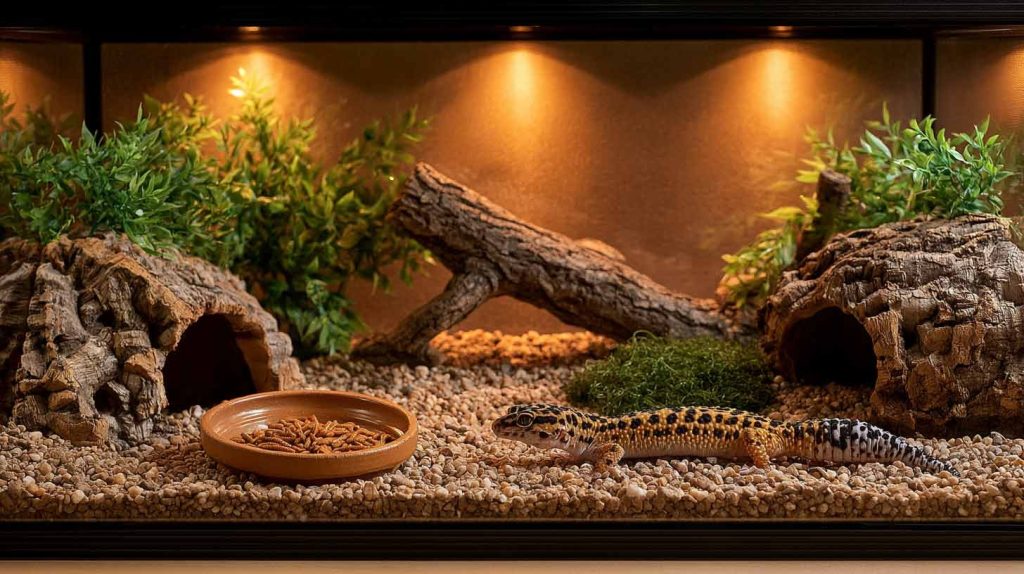
- Food Dishes: Food dishes ensure that your pet is not ingesting substrate. You can also get worm dishes that keep live worms in one place.
- Hiding Area: Leopard geckos need two hiding spots, one at the warm end and the other at the cooler end. These hideouts provide privacy and security, as well as a space away from the tank’s basking area. However, make sure that they are not spending all of their time in hiding spots and not getting enough UV light.
- Climbing branches: Make sure to provide a sturdy branch that your reptile can climb and bask. Basking branches should be strong and large enough to support the pet’s body. Otherwise, they could topple over, injuring the gecko.
- Moss: Sphagnum moss retains moisture and aids your pet in shedding.
- Plants: Add non-toxic live plants to the gecko’s enclosure. These will increase the tank’s humidity levels and enrich the overall environment.
Diet and Feeding
Leopard geckos are insectivores, meaning their diet consists of insects. The best feed for them is live insects that are gut-loaded (recently fed). These are more nutritious, and your reptile can also get in some exercise while chasing them.

You can feed your gecko the following insects.
- Mealworms
- Roaches
- Crickets
- Waxworms
- Hornwarms
- Calciworms
- Superworms
Feed your gecko only one or two insects at the same time. Moreover, monitor that none of the insects go uneaten, because they can injure the reptile.
Give butterworms, waxworms, and superworms as an occasional treat because they are all high in fat. Provide variety in diet by feeding them different insect species. Any insect you are feeding your pet should not be bigger than the gap between its eyes.
Vitamin Supplements
Every other day, try to feed the leopard gecko gut-loaded insects dusted with a vitamin supplement. A leopard gecko needs three types of vitamin supplements.

- A calcium supplement with vitamin D
- A calcium supplement without vitamin D
- A multivitamin powder suitable for reptiles
Keep alternating between the two types of calcium powder. If you have given calcium with vitamin D in one feeding session, give calcium without vitamin D in the next one. The multivitamin powder should be given once or twice a week.
To dust insects properly, add the supplement powder to a disposable plastic bag or container, then place the insects inside. Give a good shake to ensure all insects are evenly coated in powder.
Make sure that your gecko has fresh and clean water available. Replace the water daily and provide it in a dish large enough for the gecko to soak.
Never give a leopard gecko fruits or vegetables, as they cannot digest them.
Feeding Schedule
| Age Group | Feeding Frequency | Portion Size (per feeding) | Insect Size Rule | Supplements | Notes |
| Hatchlings (0–3 months) | Daily | 5-7 small insects | Smaller than the space between the eyes | Calcium (no D3) daily, D3 2x/week, Multivitamin 1x/week | Rapid growth phase; monitor appetite closely |
| Juveniles (3–12 months) | Every other day | 6-10 insects | The same rule applies | Calcium (no D3) every feeding, D3 2–3x/week, Multivitamin 1x/week | Adjust the portion if the gecko looks overweight |
| Sub-Adults (12–18 months) | 2-3 times/week | 8-12 insects | The same rule applies | Calcium (no D3) every feeding, D3 2x/week, Multivitamin 1x/week | Transition stage: watch body condition |
| Adults (18+ months) | 2 times/week | 8-10 large insects | The same rule applies | Calcium (no D3) every feeding, D3 1–2x/week, Multivitamin 1–2x/week | Avoid overfeeding: a common issue |
| Breeding Females | Every other day | 10-15 insects | The same rule applies | Calcium + D3 more frequently (3–4x/week), Multivitamin 1–2x/week | Higher calcium needs for egg production |
Shedding
Most leopard geckos usually shed every 4 to 8 weeks. To help them during shedding, give them a humid environment, including a humid hide with sphagnum moss or substrate. In too dry enclosures, geckos cannot shed properly and retain extra skin around their eyes and toes.

You can also soak your pet in a large and shallow container filled with warm water. The container should be large enough to fully submerge the gecko’s body while keeping its head above the water.
Keep in mind that leopard geckos cannot swim, so you need to monitor them closely when they are submerged in water. Also, your pet will eat its shed skin to retain some of its nutrients.
Handling Tips
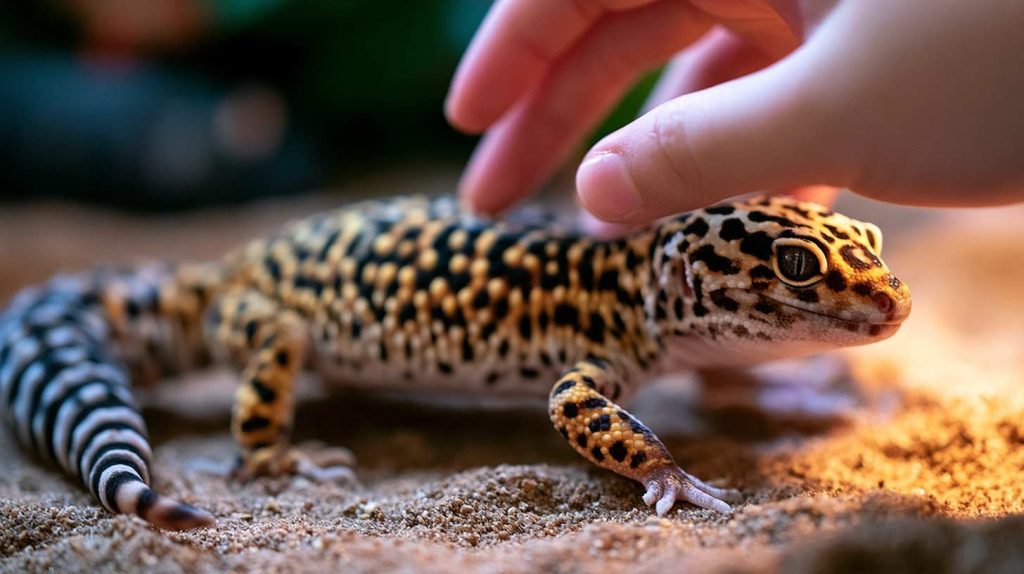
Leopard geckos are friendly and tolerate handling. However, you need to be careful not to handle your pet frequently or improperly. It can stress your lizard, particularly if it is young or shedding.
Until they are 6 inches long, do not handle your reptile regularly. Make sure to give your lizard at least a few days to acclimate to its new environment before handling it. Moreover, handling time should be minimized when the gecko is shedding.
Health and Lifespan
The average life expectancy of a leopard gecko is around 10 to 20 years with good care. Its average adult size is 6 to 9 inches long. Here is how to take care of its health.
Annual Care
Take your leopard gecko to a vet once every year. Make sure to take photos of its enclosure, heaters, lights, and diet, so that the vet can assess its overall care.
Signs of a Healthy Leopard Gecko
Here are some signs that your lizard is happy and thriving.

- Clean ears with no local swelling
- Good appetite
- Clear, clean eyes
- No swelling
- No bumps
- Appropriate basking
- Clean vent
- Alert and happy personality
- No stuck shed skin
- Ideal body weight
When to Consult a Vet
If you see the following symptoms, take your pet to a veterinarian.
- Swelling around the ears
- Swollen, sunken, or stuck eyes with discharge
- No appetite
- Pink ulcerations or other lesions on the skin
- Lumps
- Sunken belly
- Stuck shed skin
- Rapid loss of muscles in the tail and back
- Lethargy
- Not basking
- Paralysis or immobilization
Wrapping Up
Leopard gecko care consists of proper enclosure setup, nutritious diet, necessary supplements, proper handling, and annual checkups at the vet. These lizards are friendly and adorable. However, as a pet owner, you need to take care of everything to ensure your pet lives a healthy life.
Learn more about taking care of reptiles on Pet Guides.
FAQs
What is the Best Feeding Time for Leopard Geckos at Home for Better Digestion?
Leopard geckos are naturally nocturnal, so the best feeding time is in the evening or after sunset. Feeding them at night aligns with their natural hunting behavior and improves digestion, appetite, and activity levels.
How can I tell if my Leopard Gecko is Overfed or Underfed based on its Body Condition?
A healthy leopard gecko stores fat in its tail. Assessing its tail size is the best way to monitor whether it is being underfed or overfed. If your lizard is being underfed, its tail will be very thin. If it is being overfed, its tail will be overly thick and bloated.
Why is my Leopard Gecko not eating, even when the Temperature and Setup are Correct?
Temperature and setup are aspects of a bigger picture. If your gecko is not eating despite the correct temperature and setup, it might be due to stress, illness, shedding, or seasonal slowdowns. If your lizard refuses food for an extended period, you should consult a reptile vet.
Can I Keep Two Leopard Geckos Together in the Same Enclosure?
Generally, keeping two leopard geckos together in the same enclosure is not recommended. Males become extremely aggressive and territorial, and even females compete for food and space, leading to stress.