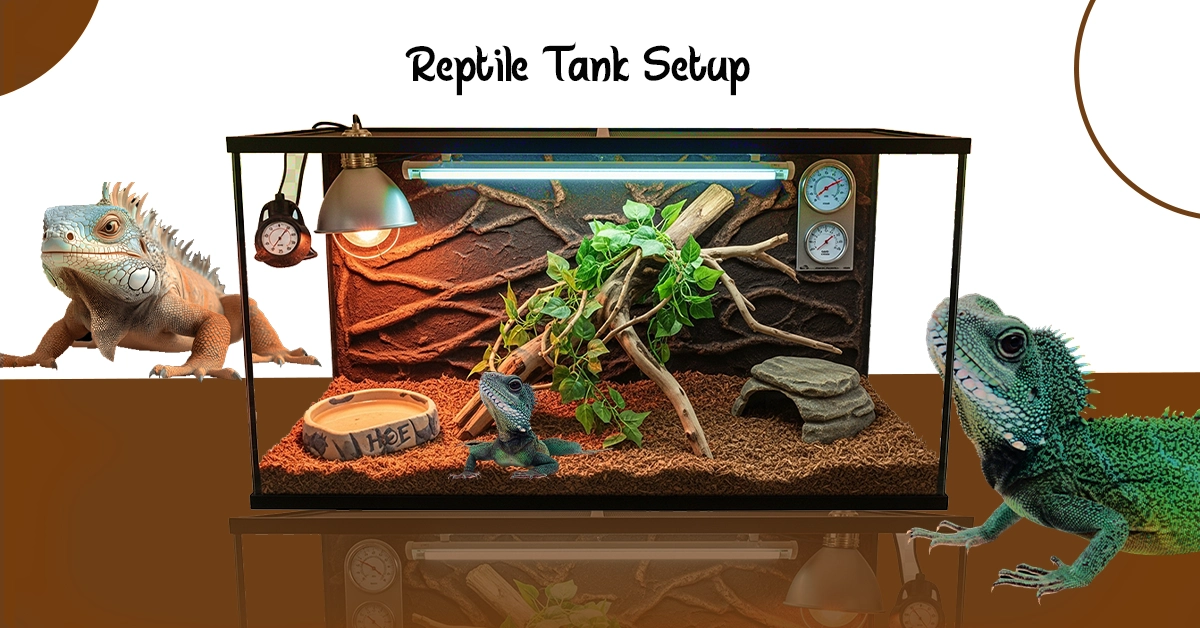

When you are bringing a new reptile pet home, one of the most important things is to set up its enclosure properly. As they cannot roam outside freely, you need to make sure their cage is equipped with everything they need.
Don’t know about a proper reptile tank setup? We’ve got you covered. In this guide, we will tell you how you can create a flourishing living space for your new scaly friend.
30-Second Summary
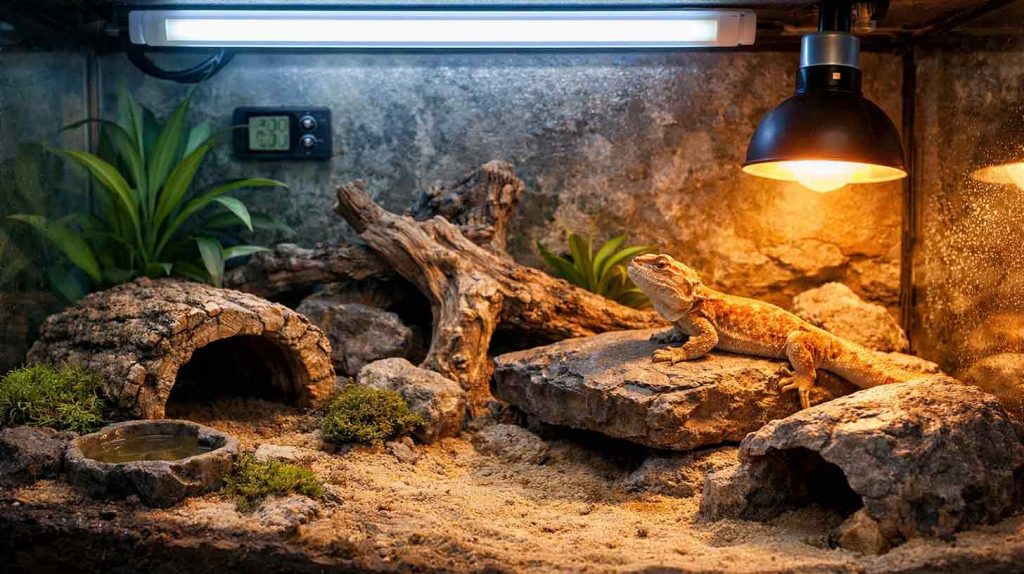
- A proper reptile tank setup should mimic the species’ natural habitat, including ideal temperature, lighting, and humidity.
- Creating a temperature gradient and a basking spot is important to allow your pet to regulate its body temperature.
- For a healthy enclosure, use UVB lighting, heat lamps, substrate bedding, and hiding spots.
- The most important step is to research your reptile’s species needs for building a safe and comfortable habitat.
Understanding a Reptile’s Habitat Needs
Before building the enclosure, you need to understand the natural needs of the species you chose. Research how big they will grow and whether they are arboreal, semi-arboreal, or terrestrial. Moreover, consider what their natural habitat looks like: do they need a humid or an arid environment to survive?
Let’s understand it in detail. Knowing your pet’s adult size helps you set up an enclosure where they feel happy and remain healthy. It should be big enough to support their enrichment and exercise.
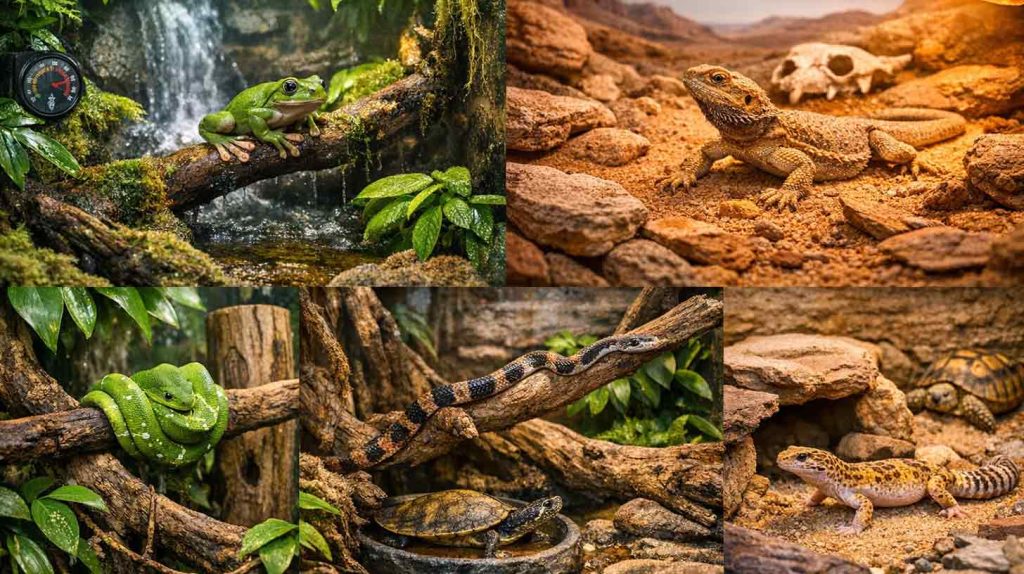
Arboreal animals usually spend most of their time in trees and canopies, while terrestrial reptiles like to stay on the ground. Semi-arboreals are mostly terrestrial, but they can also climb up or rest on low-hanging branches.
When it comes to the right environment, rainforest reptiles usually need high humidity, while desert animals need dry heat.
These are the most important things to understand, as the enclosure should closely mimic their natural habitat.
Choosing the Right Enclosure
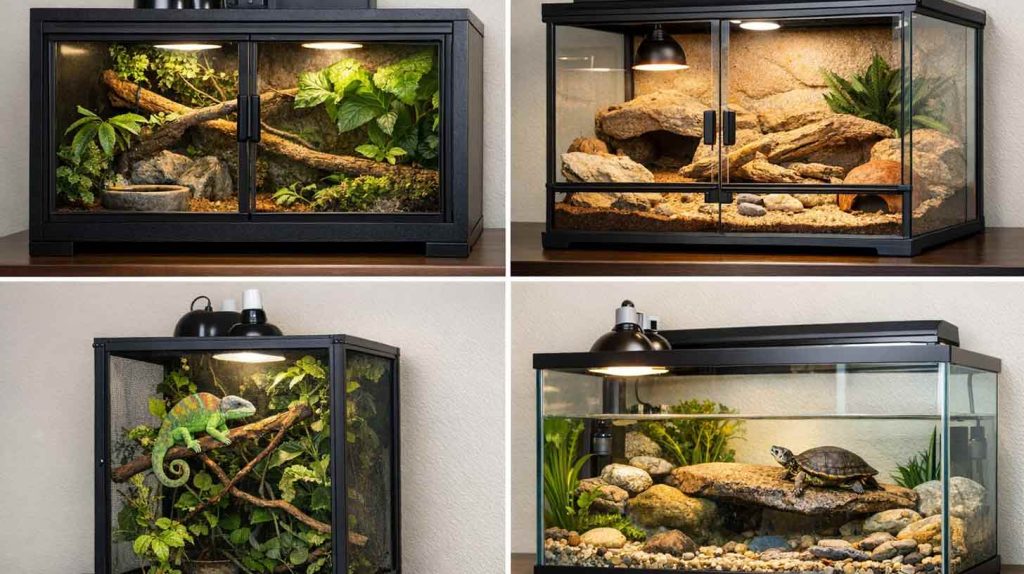
PVC Enclosers: These are the most popular type of enclosures for most terrestrial and high-humidity species. PVC is lightweight and non-porous, meaning it won’t rot or mold. It also provides better heat insulation than glass.
Front-Opening Terrariums: These are better than top-opening tanks because they allow better interaction with your pet, easy cleaning, and feeding. Moreover, unlike top-opening terrariums, you do not terrify your pet by reaching in like a predator from above.
Screen Cages: These cages are important for arboreal species, like Chameleons, because they need high airflow to prevent respiratory issues.
Glass Aquariums: These are great for aquatic species, like turtles or small and arid species that do not need a lot of humidity.
Recommended Tank Sizes for Beginners
The tank size should always be according to your species and how big it will grow in adulthood.
- Snakes: The enclosure length should be at least the total length of the snake so it can stretch easily.
- Lizards: For active medium lizards, such as bearded dragons, the minimum size should be a 4’x2’x2′ (120-gallon) enclosure.
- Arboreal Species: For them, get an enclosure with more vertical height than floor space to allow for their natural climbing behavior.
Material Safety and Selection
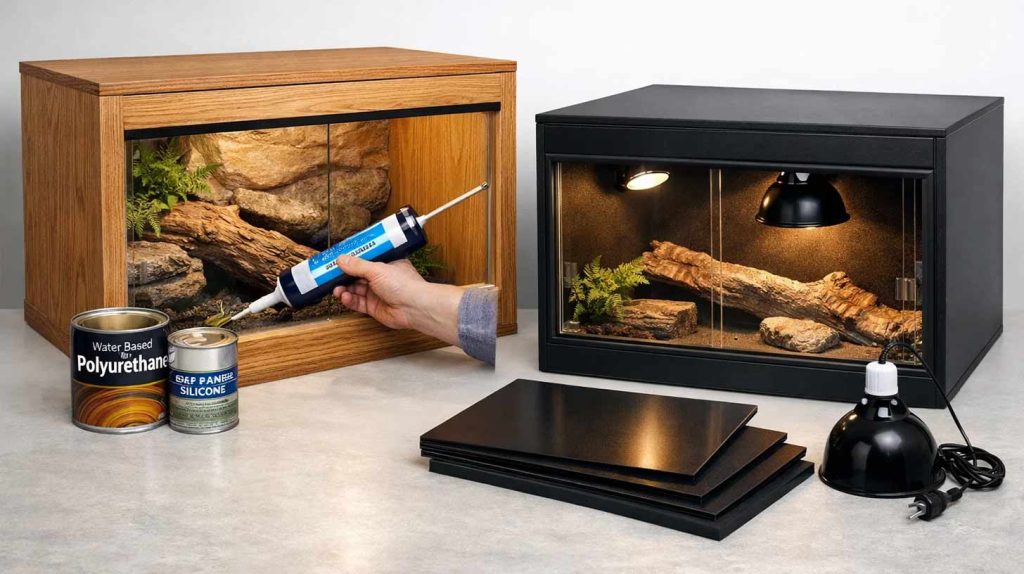
- Use safe woods, such as oak, birch, or marine-grade plywood. Do not get cedar or pine enclosures, as their aromatic phenols are toxic to your reptile’s respiratory system.
- The wood enclosures should be sealed with low-VOC and aquarium-safe silicone, or non-toxic water-based polyurethane to avoid rotting and bacterial growth.
- Make sure you choose high-quality, heat-stable PVC to avoid off-gassing harmful chemicals when placed under heat lamps.
Creating the Right Temperature Gradient
Reptiles are cold-blooded animals, meaning they cannot regulate their body temperature on their own. This is why an external heating source is important. Most reptiles need a constant temperature between 70 and 85° F. The basking spot temperature should be around 100° F. However, this number is different for every species.
Setting Up a Proper Basking Spot
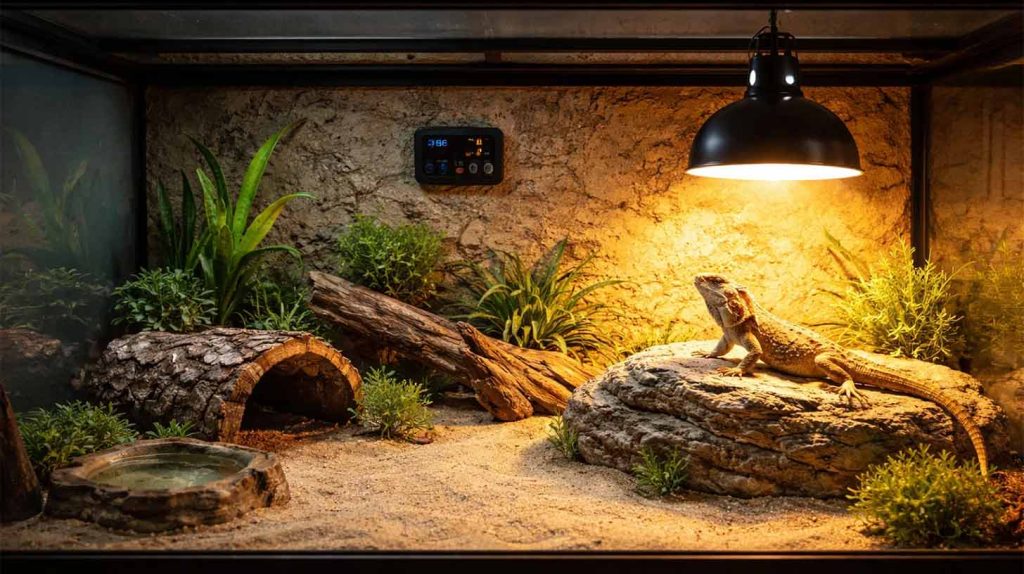
Basking means reptiles move in and out of sunlight to gain heat and regulate their body temperature. Make sure to set up a basking lamp on the end of their terrarium to create a temperature gradient. It will allow them to access heat for digestion and a cooler area for resting or sleeping.
Heat Sources for Reptile Tanks
Here are some heat sources you can install in your reptile’s tank. Remember, you need thermostats, thermometers, and hygrometers to monitor the enclosure’s temperature and humidity and adjust them accordingly.
Using a Heat Lamp
These mimic sunlight and provide heat through a light source. Make sure to apply a mesh cover on the heat lamp, so your pet doesn’t burn itself. Moreover, do not use white light, as it prevents your pet from sleeping.
Other Heating Options
You can also use heat mats and cords, as they imitate the heat sources reptiles have in the wild. However, instead of overhead heating (such as heat lamps), the enclosure floor is heated. It mimics the sun’s effect on the soil.
Just like with heat lamps, keep a barrier between the heat source and your pet to avoid them getting burned.
No matter the source you choose, make sure to create a thermal gradient to provide your pet with a comfortable enclosure.
Lighting for Reptiles
Reptiles need light for two reasons. First, just like humans, they need it for a proper sleep-wake cycle. Second, they need it for calcium metabolism.
For a day-and-night simulation, provide your pet with a period of light and a period of darkness. If you do not have this balance, your reptile will get stressed.
To achieve this balance, partially or completely block out the natural light and use a light in the terrarium with a day-and-night function.
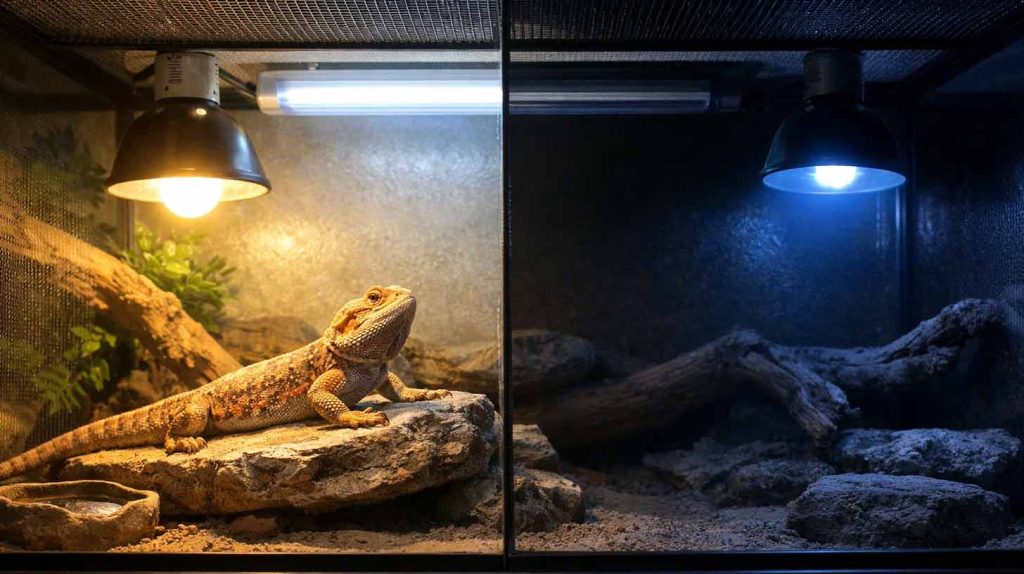
Your scaly buddy also needs ultraviolet light for calcium metabolism and vitamin D production. For this, install a UV light to simulate sunlight. Make sure to cover all types of light with a mesh cover to prevent the critter from getting injured.
Choosing the Best Substrate Bedding
Substrate is for the floor of your pet’s enclosure. It is important to provide a comfortable surface and grip, absorb waste, enable burrowing, and also maintain the right humidity levels.
There are many substrate options, such as aspen, coconut coir, topsoil, shredded bark, sand, and mulch. The right option depends on your animal and the climate they are used to. This is why researching what about your pet species is extremely important.
Make sure the substrate you choose is free of all sorts of contaminants, such as bacteria, parasites, and fungi, so that even if your pet ingests it, it does not do any harm.
Maintaining Proper Humidity Levels
Every reptile species requires different amounts of humidity or needs different methods to introduce moisture into their environment. For example, tropical iguanas and similar species need high humidity levels. Chameleons prefer to drink droplets on foliage or from the side of their habitats instead of standing water.
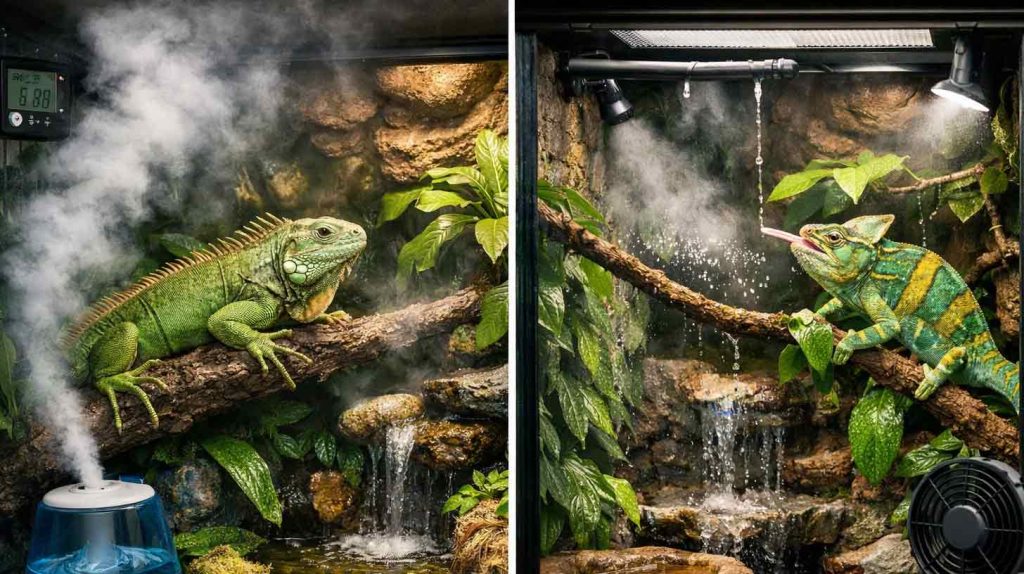
The moisture is controlled by temperature, ventilation, and the introduction of water into the enclosure. You can increase humidity by spraying water or by providing a source of running or standing water. You can also use commercially available humidifiers, misters, and aeration devices.
Adding Hiding Spots and Decorations
Reptiles need hiding spots to reduce stress and feel safe. In the wild, they use rocks, logs, and plants to hide and avoid predators. Therefore, add one hiding spot on the warm side and another on the side of the tank to allow the critter to regulate its body temperature while also staying secure.
Moreover, try to mimic the wild by adding appropriate decorations, such as branches, rocks, and plants. These elements encourage natural behaviors, such as climbing, exploring, and basking. Just make sure the decorations are stable and have no sharp edges that could harm your little friend.
Basic Reptile Starter Kit for Beginners
If you are setting up your first reptile habitat, get a simple reptile start kit to make the process easier. This kit usually includes
- A terrarium enclosure
- Heat lamp for warmth
- UVB lighting
- Thermometer and hygrometer
- Substrate bedding
- Water dish
- A few hiding spots
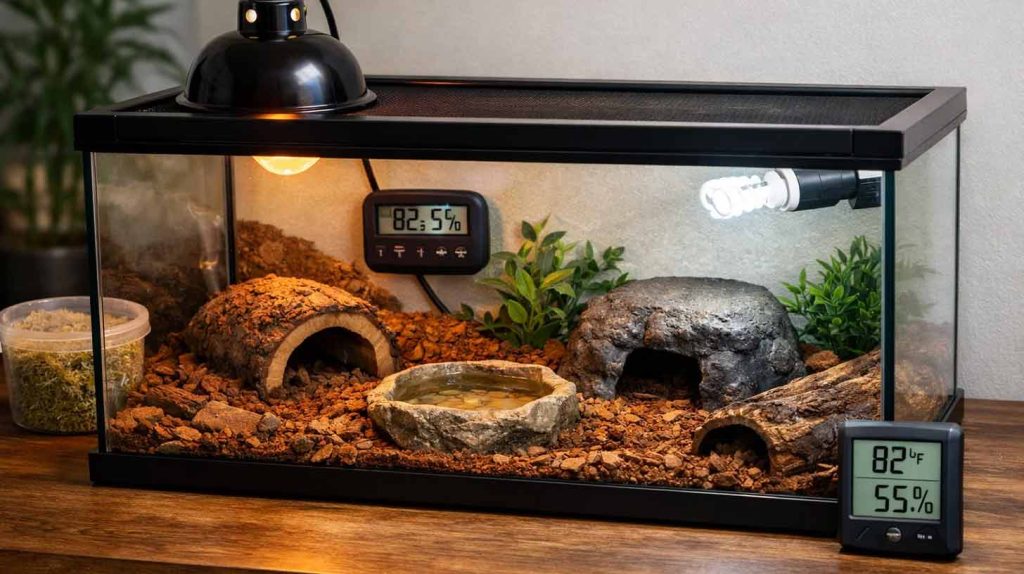
These basic items create a comfortable, ectothermic environment for your reptile.
Advanced Option: Bioactive Setup
A bioactive setup is a more natural type of vivarium. It includes live plants, beneficial microorganisms, and small insects that break down waste. This setup perfectly imitates a reptile’s natural environment and needs cleaning once every 5 years.
These enclosures also improve humidity control and create an enriching habitat for reptiles. However, they need more planning and maintenance, so beginners should start with a simple setup before moving to setting up a bioactive system.
Common Reptile Tank Setup Mistakes
Many new reptile owners make small mistakes while setting up their first enclosure. One common problem is failing to create a balanced temperature gradient, which prevents reptiles from regulating their body temperature.
Other mistakes include using the wrong substrate bedding, not providing hiding spots, and skipping UVB lights.
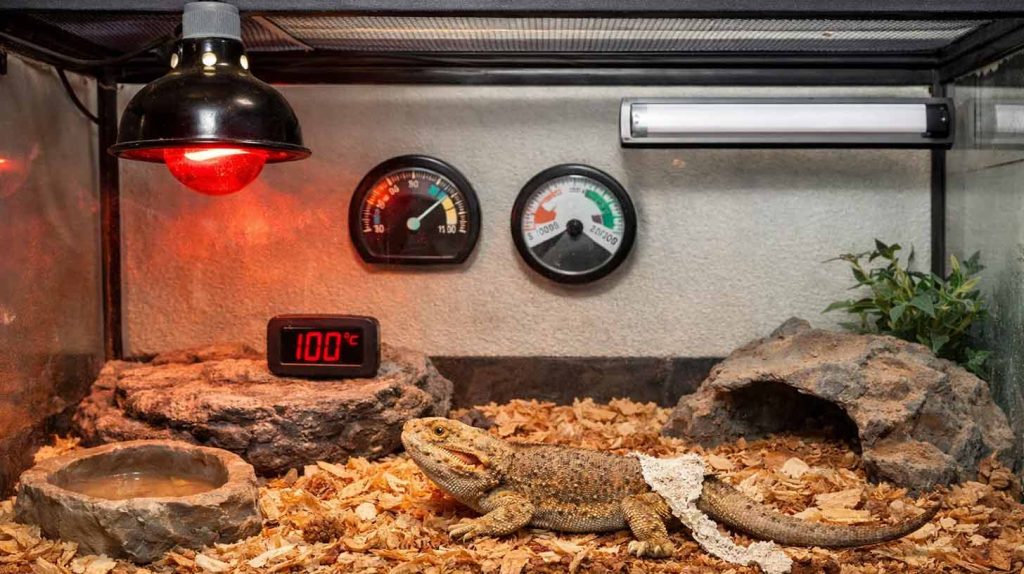
Incorrect humidity levels also lead to shedding problems and other health issues. Therefore, research your reptiles’ needs to avoid these problems.
Final Tips for First-Time Reptile Owners
- Before bringing the reptile home, make sure the entire reptile tank setup is ready. Test the heat lamp, light, and humidity to ensure they work.
- Monitor temperature and humidity levels inside the tank regularly using a thermometer and hygrometer.
- Clean the enclosure to promote a healthy environment.
- Most importantly, as we have said before, research and learn about the specific needs of your reptile species to ensure you provide them with everything they need.
Conclusion
Creating the right reptile tank setup is important to keep your little scaly buddy healthy and comfortable. Choose the right enclosure, maintain proper temperature gradient, provide UVB lighting, and add suitable substrate bedding and hiding spots to build a safe and natural habitat.
Learn more about how to take care of your reptile pet on Pet Guides.
FAQs
How long should UVB Lighting stay on in a Reptile Tank?
Most reptiles need around 10 to 12 hours of UVB lighting every day to mimic a natural daylight cycle. You can use an automatic timer to maintain a consistent schedule.
Can Reptiles Survive without a Basking Spot in their Enclosure?
No, most reptiles need a basking spot to regulate their body temperature and digest food. Without it, reptiles may become lethargic, stop eating, or develop health issues.
How often should I clean my Reptile’s Enclosure?
You should do spot cleaning daily to remove waste. Deeper cleaning is best every few weeks, depending on the substrate and tank size.
Is a Reptile Starter Kit enough for a Proper Reptile Tank Setup?
Yes, a reptile starter kit can provide basic equipment, but you may need additional items, like extra hiding spots, climbing branches, or larger heating systems, depending on your reptile species.