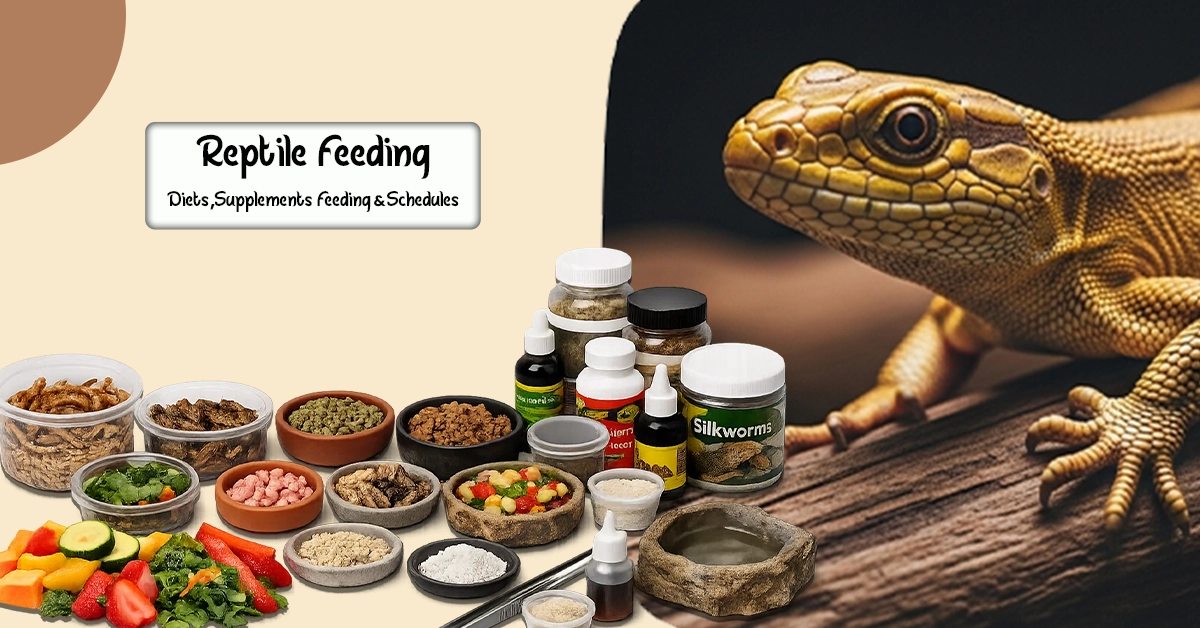

Feeding your reptile pet properly and on a fixed schedule is necessary for their growth and health. If you do not take care of your reptile’s feeding, it will struggle with weight, energy, and other health issues.
In this guide, you will learn everything about reptile feeding, a proper chart, how to feed different species, supplements for reptile nutrition, and actions to take if your pet is not eating properly.
30-Second Summary
- Reptiles usually have species-specific diets, and feeding them correctly depends on age, type, and metabolism.
- You need to combine a consistent feeding schedule, a balanced diet, and proper supplements for long-term reptile health.
- Environmental factors, such as temperature, UVB lighting, and stress, directly affect appetite and digestion.
- Monitoring your reptile’s behavior, weight, and eating habits is the best way to prevent any health issues early.
What Do Reptiles Eat?
Reptiles are classified into
- Herbivores
- Insectivores
- Carnivores
- Omnivores
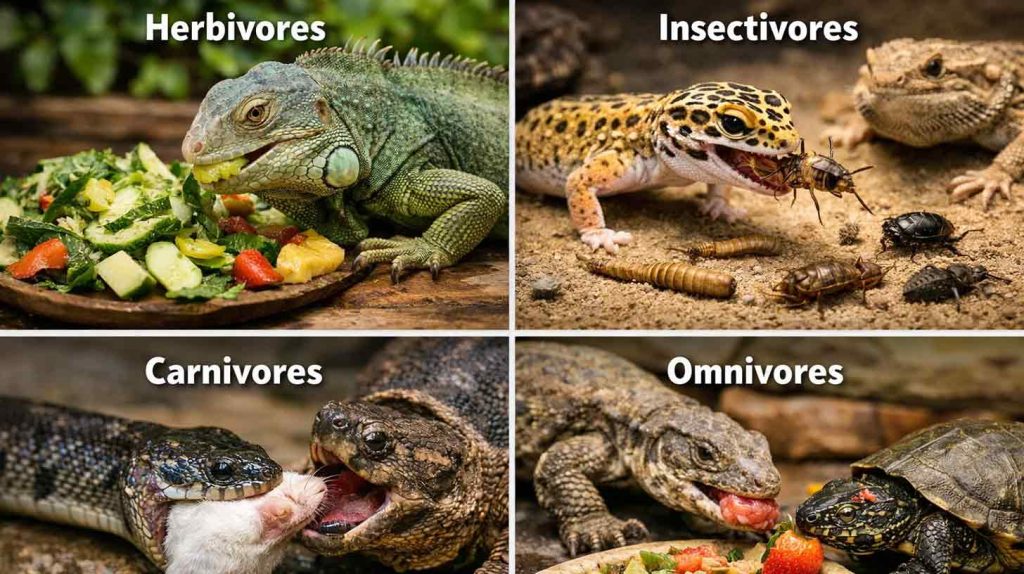
Herbivores
Examples: Tortoises, spiny-tailed lizards, and green iguanas
These reptiles should eat fresh food daily. Most of their diet consists of leafy greens. You can also give them other vegetables as supplements. These reptiles also eat fruit, but it is important to feed it to them in moderation.
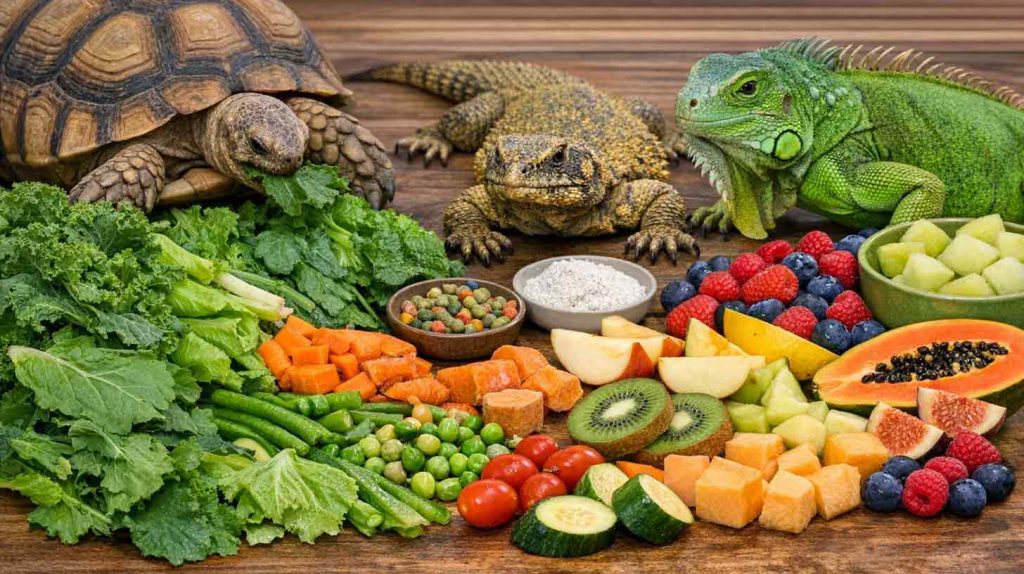
Moreover, avoid giving them vitamin-deficient, fiber-rich food, such as lettuce and celery. The “salad” of leafy greens should be supplemented with calcium and vitamins daily for baby reptiles, while bi-weekly for adult pets. Also, do not feed them insects or prey items.
Here is what you can provide to your herbivorous scaly friend.
- Greens: Mustard greens, romaine lettuce, parsley, kale, carrot tops, dandelion greens, collard greens, and turnip greens.
- Vegetables: Bell peppers, tomatoes, peas, green beans, shredded carrots and sweet potatoes, squash, and zucchini. You can feed these raw or cooked.
- Fruits: Kiwi, pears, bananas, melons, figs, papaya, berries, and apples.
Insectivores
Example: Young Chinese water dragons, geckos, chameleons, and young monitors
These reptiles should be given insects as a major portion of their diet. Feed them gut-loaded or dusted insects with supplements. The insects you can feed them include
- Grasshoppers
- Brown crickets
- Mealworms
- Occasionally, wax worms
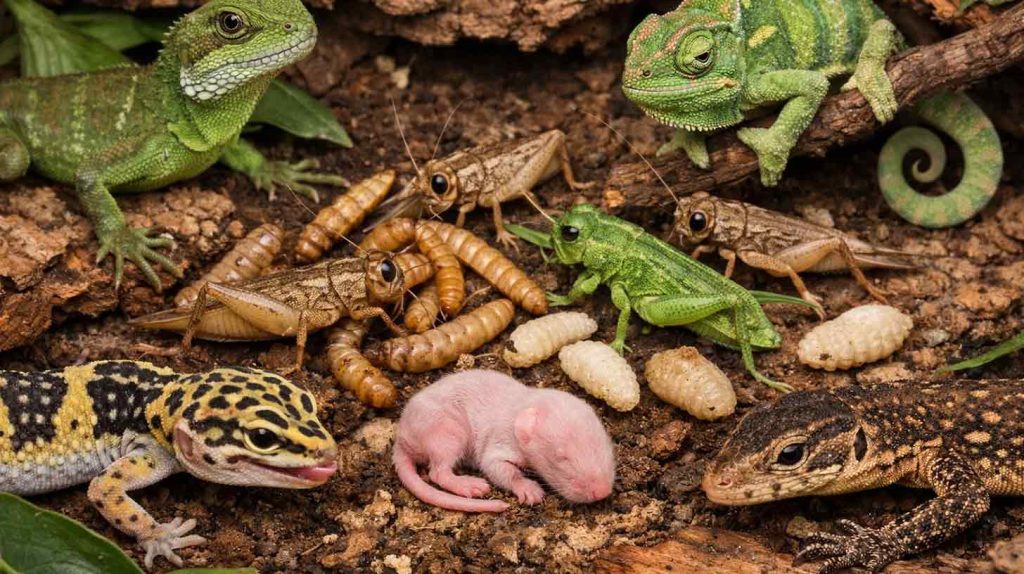
You can also occasionally give them newborn pinky mice that have been warmed to room temperature. One thing to remember is not to feed your insectivore reptiles fireflies, as they are extremely toxic and can kill them.
Carnivores
Example: Adult water dragons, adult monitors, snakes, crocodilians, and most aquatic turtles.
You need to feed young carnivorous lizards daily. The turtles should be fed once or twice every week. The snakes should be given food once every 7 to 14 days. The diet of these reptiles includes small mammals such as rats and mice.
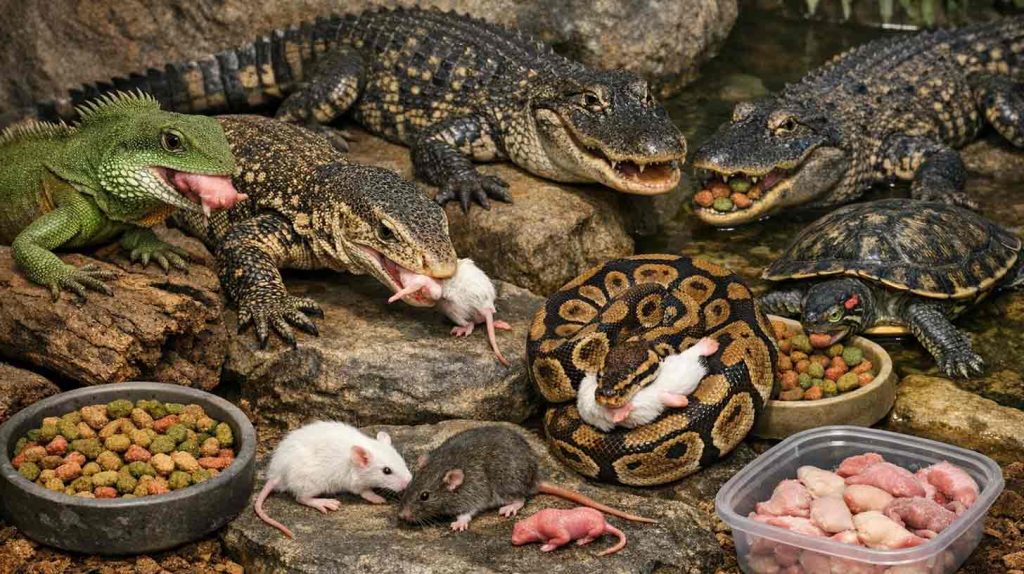
Some carnivores can also be given a commercial pelleted diet formulated specifically for their pet species. One thing to keep in mind is that some carnivorous species eat smaller reptiles, so do not keep your small pets in the same cage with them.
Omnivores
Example: Box turtles, semi-aquatic turtles, bearded dragons, and many skinks.
The diet of these species includes vegetables and insects. As juveniles, these species are fed insects and leafy greens daily. However, as they grow, they eat more vegetables and fewer insects.
Once they reach adulthood, they should be fed insects once or twice a week, while vegetables, leafy greens, and fruits should be fed daily.
Why Feeding Schedules Matter for Your Reptile
Reptiles have unique metabolisms that need properly timed meals. Too much food can cause obesity, while too little can cause weakness. Therefore, a careful feeding schedule is necessary because it
- Prevents lethargy, obesity, and other health problems
- Supports growth and health
- Mimics wild feeding behaviors, encouraging natural instincts by reducing stress
Reptile Feeding Guide by Species
Here are some common species and how to feed them properly. Make sure to adjust feeding schedules based on your pet’s size, age, and activity levels.
Bearded Dragon Feeding Schedule
Bearded dragons are omnivores, meaning their diet consists of both insects and vegetables. Young bearded dragons need more protein, whereas adults eat a more plant-based diet.
| Age Stage | Diet | Feeding Frequency |
| Hatchling (0–3 months) | Small insects (crickets, dubia roaches) + finely chopped greens | 2–3 times daily |
| Juvenile (3–12 months) | ~70% insects, 30% vegetables | 1–2 times daily |
| Sub-adult (12–18 months) | Balanced insects + vegetables | Once daily |
| Adult (18+ months) | ~70–80% vegetables, 20–30% insects | Daily (insects 2–3x/week) |
Ball Python Feeding Schedule
Ball pythons should be fed less frequently because of their slow metabolism.
| Age Stage | Diet | Feeding Frequency |
| Hatchling | Pinky/fuzzy mice | Every 5–7 days |
| Juvenile | Hopper mice or rat pups | Every 7 days |
| Sub-adult | Small rats | Every 7–10 days |
| Adult | Medium rats | Every 10–14 days |
Chameleon Feeding Schedule
These reptiles need careful feeding schedules, particularly when moisture-rich insects are provided to support hydration.
| Age Stage | Diet | Feeding Frequency |
| Hatchling | Fruit flies, pinhead crickets | 2–3 times daily |
| Juvenile | Gut-loaded crickets, roaches, worms | Daily |
| Sub-adult | A variety of insects | Every 1–2 days |
| Adult | Insects (crickets, roaches, silkworms) | Every 2–3 days |
Leopard Gecko Diet Schedule
Leopard geckos are strict insectivores, meaning their diet consists entirely of insects throughout their lives.
| Age Stage | Diet | Feeding Frequency |
| Hatchling (0–3 months) | Small insects (crickets, mealworms) | Daily |
| Juvenile (3–12 months) | Insects (crickets, roaches, worms) | Every 1–2 days |
| Sub-adult | Mixed insects | Every 2 days |
| Adult (12+ months) | Insects (gut-loaded variety) | 2–3 times per week |
Turtle/Tortoise Feeding Schedule
Tortoises need a high-fiber, low-protein, low-fat diet that focuses on leafy greens. For aquatic turtles, varied, nutrient-dense food is required. You should feed them in the morning when they have warmed up. It results in better digestion.
| Age Stage | Diet | Feeding Frequency |
| Hatchling | Higher protein (pellets, insects) + some greens | Daily |
| Juvenile | Balanced protein + vegetables | Daily |
| Adult Turtle (aquatic) | Pellets, insects, leafy greens | Every 1–2 days |
| Adult Tortoise | Leafy greens, grasses, vegetables (very low fruit) | Daily |
Corn Snake Feeding Schedule
The prey item should be roughly 1–1.5 times the width of the snake’s mid-body. Adult snakes can become obese, and in that case, you need to further reduce the frequency of meals to every 21 to 35 days.
| Age Stage | Diet | Feeding Frequency |
| Hatchling | Pinky mice | Every 5–7 days |
| Juvenile | Fuzzy/hopper mice | Every 7 days |
| Sub-adult | Adult mice | Every 7–10 days |
| Adult | Large mice | Every 10–14 days |
Reptile Feeding Chart by Species
Here are some other reptile species and their feeding schedule.
| Species | Diet | Feeding Frequency |
| Crested Gecko | Commercial gecko diet + occasional insects | Diet 3–4x/week, insects 1–2x/week |
| Green Iguana | Leafy greens, vegetables, and limited fruit | Daily |
| Blue-Tongue Skink | Omnivorous (protein, vegetables, fruit) | Juveniles daily, adults 2–3x/week |
| Red-Eared Slider | Pellets, insects, leafy greens | Juveniles daily, adults every 1–2 days |
| African Fat-Tailed Gecko | Insects (similar to a leopard gecko) | Every 2–3 days |
| Uromastyx | Herbivore (leafy greens, seeds, vegetables) | Daily |
| Monitor Lizard (Savannah) | Insects, occasional rodents | 3–4x/week (adults less frequent) |
| King Snake | Rodents (mice) | Every 7–14 days |
Live vs Frozen Feeder Mice
The choice between live and frozen mice is an important decision for reptile owners, particularly those who have snakes. While both options exist, frozen-thawed prey is widely recommended by vets and experienced keepers.
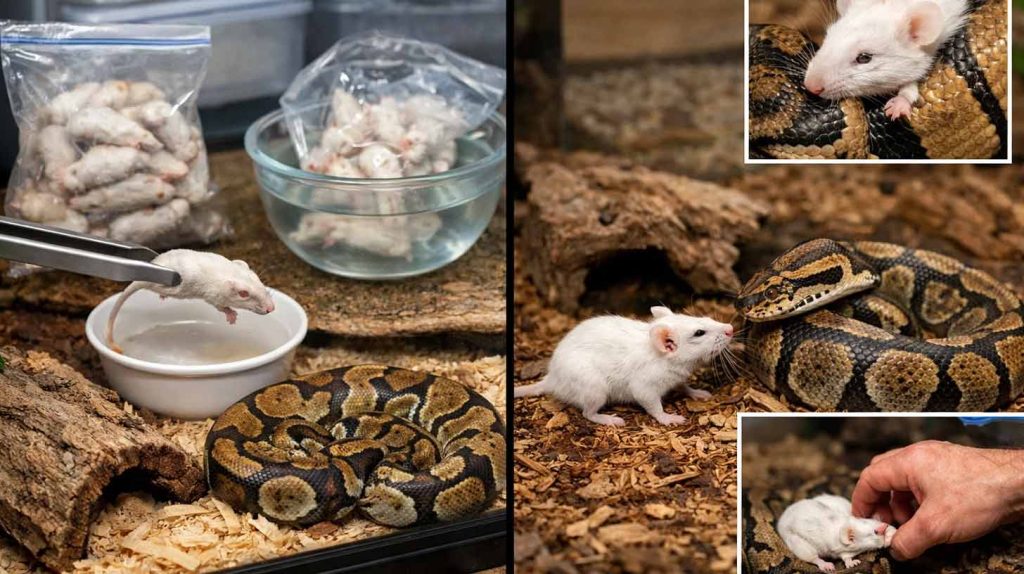
Frozen-Thawed Mice
Frozen mice are pre-killed, stored, and thawed before feeding. The main benefits include
- Safer for reptiles: Live rodents can bite, scratch, or seriously injure snakes.
- More humane: Frozen mice are pre-killed under controlled conditions.
- Convenient storage: You can keep these in a freezer for long periods.
- Easier portion control: It is easier to give the right amount and size of frozen mice.
Best Practices
- Defrost them by thawing in the freezer or by placing them in a sealed bag in warm water.
- Do not microwave, as it can cause uneven heating.
- Warm to slightly above room temperature before offering.
Live Mice
Live feeding means offering a live rodent to the reptile.
Risks
- There is a high risk of injury. Rodents can bite and cause infections.
- It can be stressful for the pet to deal with live mice.
- It is considered less humane because live prey might experience stress or injury from being confined in a cage.
When it may be used: It should only be used when your snake refuses to eat frozen-thawed mice, and even then, supervised feeding is crucial.
Feeder Insects for Reptiles
Feeder insects are the primary food source for many reptiles, particularly lizards. However, not all insects are nutritionally equal.
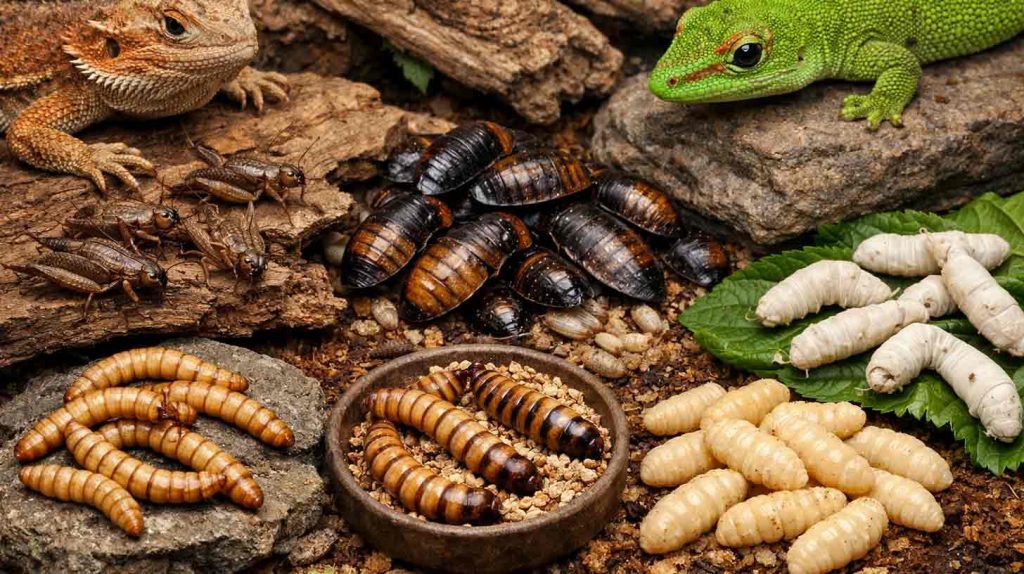
Some common feeder insects include
- Crickets: These are widely used, as they are a great source of protein.
- Dubia roaches: These are high-nutrition, easy-to-digest, and low-odor feed.
- Mealworms: These are convenient but higher in fat and have a harder exoskeleton.
- Superworms: These are more active and have higher fat content.
- Waxworms: These are very high in fat; therefore, perfect for treats only.
- Silkworms: These are highly nutritious and soft-bodied.
Gut-Loading (Essential)
Feeder insects should be given nutritious food, like grains and vegetables, 24 to 48 hours before feeding them to your reptile. This is called gut-loading, and it is essential for improving the nutritional value of feeder insects.
Calcium Dusting
Dust insects with calcium powder before feeding. It helps prevent Metabolic Bone Disease, which is a common and serious condition in reptiles.
Best Practices
- Offer different types of insects for balanced nutrition.
- Avoid wild-caught insects, as they carry a risk of pesticides and parasites.
- Remove uneaten insects to prevent stress or injury for your reptile.
Supplements for Reptile Nutrition
Even with a good diet, most captive reptiles require supplements to stay healthy.
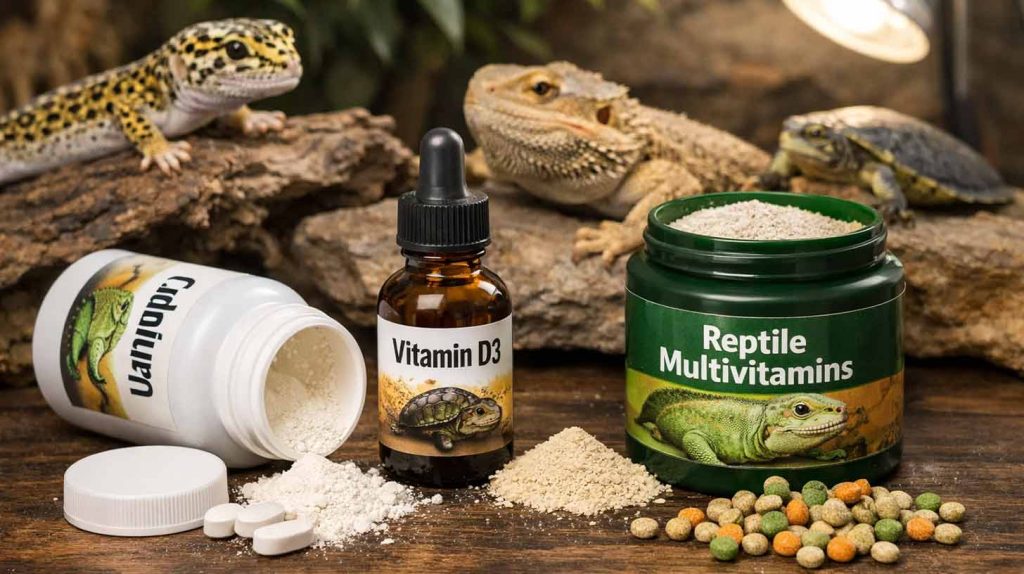
The main supplements include
- Calcium: It is crucial for bone health and muscle function, particularly for growing reptiles and egg-laying females.
- Vitamin D3: It helps reptiles absorb calcium. It is needed if UVB lighting is insufficient.
- Multivitamins: These provide trace nutrients to reptiles that are not always present in captive diets.
How to Use Supplements
You should dust the feeder insects lightly before feeding them. Try to use calcium more frequently than multivitamins.
General Supplement Schedule
This schedule varies slightly by species, but it is a widely accepted guideline.
- Calcium with D3: Most feedings
- Calcium without D3: 1 to 2 times per week
- Multivitamin: 1 time per week or every 2 weeks
Important Considerations
- Over-supplementation can be harmful for your pets.
- UVB lighting is still important for nutrient absorption.
- Always tailor supplementation to species and age.
Reptile Not Eating: What To Do
It is common for reptiles to occasionally refuse food. However, as a pet owner, you should understand the reason behind it.
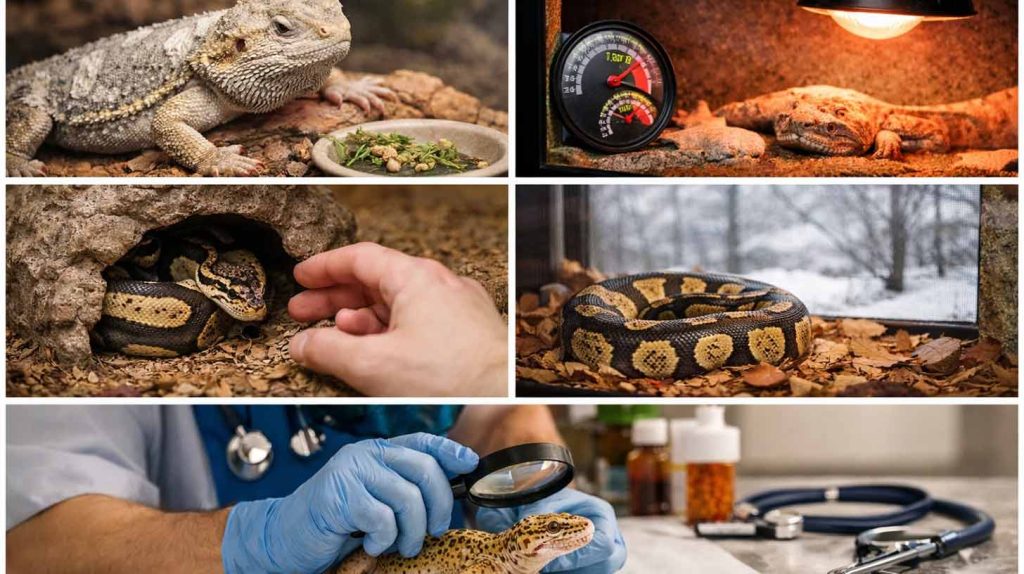
- Shedding: Reptiles often stop eating before or during shedding.
- Temperature Issues: Incorrect temperatures slow your reptile’s digestion and metabolism. A cold reptile often refuses food.
- Stress: A new environment, enclosure changes, and excessive handling can cause stress, leading your scaly pet to refuse food.
- Seasonal Changes: Some species, such as ball pythons, may fast during cooler months.
- Illness: Infections, parasites, and other internal issues can also cause refusal of food.
What You Should Do
- Check the temperature and humidity level of the enclosure and adjust it accordingly.
- Ensure proper lighting, particularly UVB for lizards.
- Reduce their stress by not handling them excessively.
- Offer them appropriate prey size and type.
When to Worry
- Significant weight loss
- Refusal to eat food for more than 2 weeks (young reptiles) and more than 4 weeks (adults, depending on species)
- Signs of illness, such as lethargy, swelling, and discharge
In these cases, you need to consult a reptile veterinarian immediately.
Helpful Tips
- Try different prey types and sizes to see which your pet likes to eat.
- Feed during natural active times (such as night for nocturnal species).
- Ensure proper hydration through clean water and a moisture-rich diet.
Common Reptile Feeding Mistakes to Avoid
The following are some mistakes you should avoid.
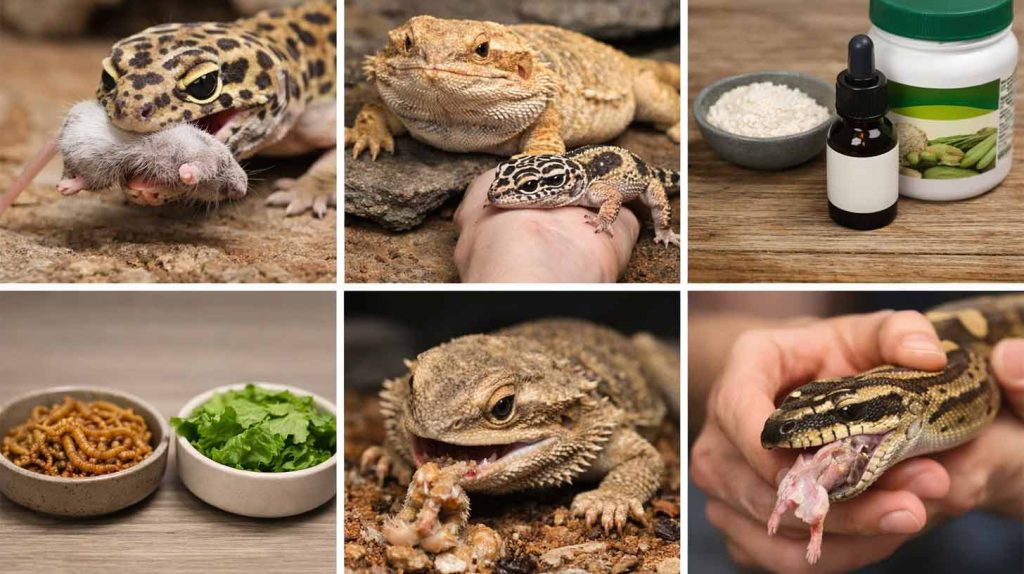
- Improper Prey Size: Prey should not be wider than the space between your pet’s eyes to prevent choking.
- Over- or underfeeding: Both obesity and weakness are risky. Adjust meal frequency based on age and species.
- Lack of Supplementation: Not using calcium or vitamin D3 powder, especially for diurnal lizards and geckos, leads to Metabolic Bone Disease.
- Poor Diet Variety: Giving only one type of insect or leafy greens to your pet leads to nutritional deficiencies.
- Handling immediately after Meals: It can cause stress and lead to regurgitation.
Final Thoughts
Proper reptile feeding is a great responsibility, because your pet’s health and growth depend on how well-timed and nutrient-dense their diet is. Whether you have geckos, a ball python, or a turtle, you should research the species, its requirements, and feed them accordingly.
For more information on caring for your reptile pet, visit Pet Guides.
FAQs
What are the Signs that My Reptile is Being Overfed or Underfed?
Overfed reptiles become overweight and inactive, and show reduced movement and appetite. On the other hand, underfed reptiles appear thinner, have visible bones, grow slowly, and have low energy. Therefore, monitoring your pet’s weight and body shape is important for maintaining balance.
How can I Safely Switch My Reptile from Live Prey to Frozen-Thawed Food?
You should start by giving your pet warmed, freshly thawed prey that closely mimics live movement. You can gently wiggle it with tongs to encourage your reptile to eat it. Be patient and gradually yet consistently introduce this new type of food.
How do I Prevent Metabolic Bone Disease in Reptiles?
Ensure proper calcium supplementation, provide UVB lighting, and maintain a balanced diet. Regular calcium dusting and a correct lighting setup are essential to prevent this serious disease.
What should I do if My Reptile Suddenly Stops Eating?
First, you should check environmental factors, such as the cage’s temperature, lighting, and humidity. Reduce your pet’s stress by not handling it excessively and giving it proper prey size in meals. If it still does not eat, consult a reptile vet immediately.