
20- Second Summary
This guide answers whether betta fish need a filter by explaining betta fish filter requirements, water stability, and betta fish ammonia control.
It compares betta fish tank filter setups to filterless care, covers betta fish water quality, and shows how a low-flow filter for betta fish and a sponge filter for betta fish support long-term health through proper betta fish aquarium maintenance.
Do Betta Fish Need a Filter?
Most people think that betta fish have the labyrinth organ, which helps them breathe air from the surface of the water; they might do well without a filter. But this is wrong because the need for a filter in a betta fish tank is not for it to breathe, but to create a healthy, ammonia-free environment that can increase the lifespan of your betta from 3 to 5 years to seven or eight years.
To address the question of whether they need a filter, the answer is very simple. If you can commit to frequent water changes in its tank, then you can make your betta live longer without a filter.
But having a filter can help you maintain the stability of the water inside the tank by preventing the accumulation of ammonia in the water.
Can Betta Fish Live Without a Filter?
Yes, they can live without a filter, but this will depend on your commitment as their owner to keep the tank water ammonia-free by frequent changes.
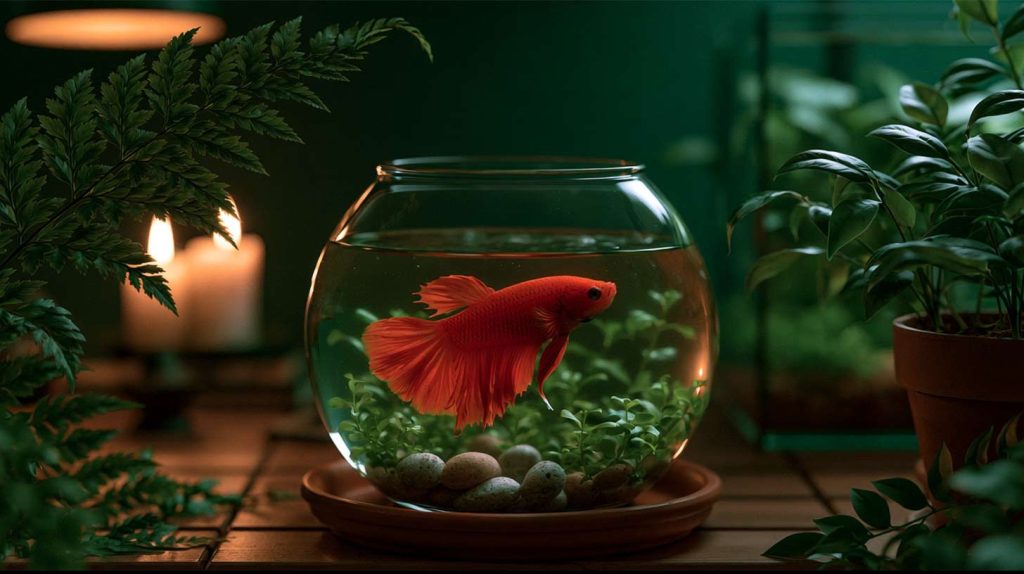
A single missed water change in a one-gallon bowl can cause ammonia levels to spike within 24 hours, causing stress that shortens your fish’s life even if it doesn’t kill them immediately.
If you are not committed to water changes, and your betta lives in a filterless tank within poor water conditions, they can develop chronic stress, leading to diseases like fin rot and velvet, which can even reduce their lifespan.
Betta Fish Filter Requirement Explained
To understand the betta fish filter requirement, we need to understand the difference between breathing and the detoxification of water:

- Betta fish breathe through their labyrinth organ, which provides them with the oxygen they need to live.
- Detoxification involves the process of removing the toxic buildups that can compromise the life of your fish.
A betta fish tank not only consists of uneaten food particles but also the fish wastes, which form nitrogen compounds that, when they accumulate and are mixed with ammonia, can create a toxic environment for your fish, causing organ damage.
A filter helps to mitigate this through a biological process.
- A filter helps to create an environment where beneficial bacteria can live and thrive inside the betta fish tank and perform the nitrogen cycle to keep the tank environment safe for your betta.
- The bacteria convert the ammonia produced by fish waste and uneaten food into nitrite, which can still be toxic.
- Nitrite is then converted into nitrate. This is less toxic and manageable with water changes.
Hence, though the bettas can get their own oxygen from the water surface, they cannot solve their water toxicity issues without a filtered environment.
Betta Fish Tank Filter vs Filterless Setup
By understanding the difference between a filterless betta fish tank and a tank filter, you can make an informed decision by considering the amount of commitment and maintenance you may require in both cases.
| Care Factor | Filtered Betta Tank | Filterless Betta Tank |
| Water quality management | Maintained through biological filtration once the tank is cycled | Controlled only through frequent water changes |
| Beneficial bacteria | Established during a 4 to 6 week cycling period, keeping ammonia and nitrite near zero | No stable bacterial colonies to process waste |
| Water change schedule | 25 to 50 percent water changes are performed weekly | Water changes are required every 2 to 3 days in small tanks |
| Ammonia buildup risk | Low when routine maintenance is followed | High, with toxic levels possible within 24 to 48 hours if a change is missed |
| Water stability | Consistent and predictable parameters | Fluctuates rapidly and unpredictably |
| Impact on betta health | Reduced stress and stronger immune response | Increased stress and higher disease risk |
| Long-term outcomes | Bettas often live 5 to 7 years or longer with proper care | Lifespan is often shorter due to water quality challenges |
| Overall maintenance effort | Manageable and sustainable long-term | Demanding and difficult to maintain consistently |
Having a filter can not only help you with proper maintenance, but also reduce the stress on you with water management and changes. Plus, it also reduces environmental stress on your fish, making it live longer and disease-free.
Choosing the Best Filter for Betta Fish
The flowing and long beautiful fins of betta fish can get damaged physically and stressed by a high-flow filter that can cause strong currents in the water.

Hence, in order to help the betta fish swim without pressure on their fins, you need to incorporate a low-flow filter system that produces very gentle water movement.
A typical of 100 to 200 gallons per hour (GPH) for a five-gallon tank is more suitable than many standard filters designed for large tanks, which can produce excessive flow, not healthy for a betta fish.
Low-flow filter solutions for betta fish tanks include: sponge filters, adjustable hang-on-back filters with reduced flow, and internal filters with flow control options.
Sponge Filter for Betta Fish
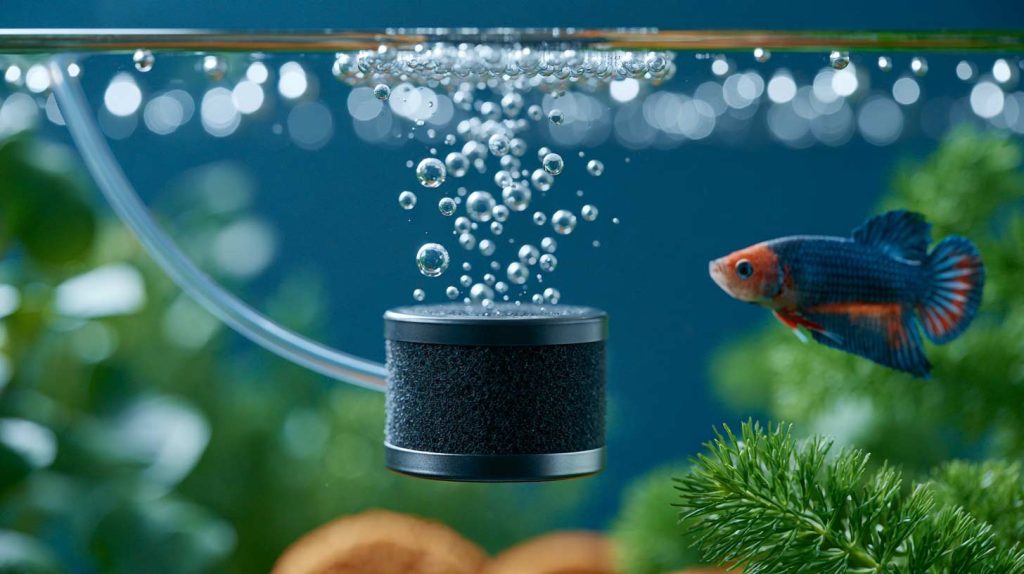
These gentle filters are not only inexpensive but also excellent for small tanks of up to 10 gallons. But these require an air pump.
Hang-on-Back Filter for Betta Fish
These filters are mounted on the rim of the tank. They take water from the tank, run it through the filter, and return it to the tank via a small spillway.

They do not take up much space inside the tank, but they do produce excessive flow in some models that might not be ideal for bettas. Hence, choose the models that are designed specifically for betta tanks with an adjustable flow capacity.
Internal Filter for Betta Fish
Internal filters take up space inside the tank, and their flow strength varies across models; one can pick a gentler one for betta fish tanks.
But these filters can collect debris from the tank water around their filter unit, requiring them to be cleaned regularly for better performance.
Betta Fish Filtration System Types Compared
For betta-specific setups, sponge filters are generally considered the best choice due to superior flow characteristics. Hang-on-back filters with adjustable flow are the second choice, and internal filters are viable if specifically selected for low flow.
| Filter Type | Maintenance Needs | Gentle Flow Options for Bettas | Betta Comfort and Environment | Cost Effectiveness and Replacement | Filtration Effectiveness | Water Change Needs |
| Sponge Filter | Rinse the sponge in the tank water every 2 to 4 weeks | Naturally gentle, ideal for betta tanks | Excellent, low stress, safe for fins | Very affordable, sponge lasts 6 to 12 months | Strong biological filtration, limited mechanical | 25 to 30 percent weekly |
| Hang on Back Filter | Replace or rinse media every 3 to 4 weeks | Gentle flow models and baffles are widely available | Good if the flow is adjusted properly | Moderate cost, media replaced every 1 to 3 months | Strong mechanical and biological filtration | 25 percent weekly |
| Internal Filter | Clean intake and media every 2 to 3 weeks | Some low-flow models are available | Fair to good, depends on flow control | Moderate cost, media replaced every 2 to 3 months | Effective but less stable than HOB or sponge | 25 to 30 percent weekly |
Betta Fish Aquarium Maintenance With a Filter
Even though a filtered tank requires less maintenance than a filterless tank, it still needs ongoing maintenance.

- When cleaning your biological filter, do it carefully and not so thoroughly. As in the case of a sponge filter, you just need to rinse the filter media in the old tank water during the weekly water changes. Never clean them with tap water that has chlorine. Doing so prevents the bacterial colonies that live inside the filter.
- Do not replace all of the filter media at one go. Change one quarter of the media first, so that the bacterial colonies from the old filter media can swap to the new one, without having the filter lose its capacity at once.
- Monitor the filter’s intake and output regularly. Keep a check on any clogs that are reducing the flow and effectiveness of the filter.
Final Remarks: Betta Fish Health and Filtration
The quality of your betta fish tank is directly related to the health and longevity of your water pet.
A filtered tank provides stable water conditions, improving the immunity of the fish and reducing the chances of skin or stress-related diseases in them.
Healthy tank water with a proper filtration setup:
- Increases the lifespan of your betta fish from 3 to 5 years to 7 plus years.
- Enhances the color vibrancy of your fish.
- Reduces the chances of skin diseases and stress on your betta fish.
- Your fish is more active, healthy, and happy.
Looking at these benefits, I guess you will definitely consider investing in a suitable filter for your betta fish tank to create a better environment for your pet and fewer maintenance requirements for yourself.
For more interesting fish-related blogs, visit Pet Guides.
Frequently Asked Questions
Do betta fish need a filter in a five-gallon tank?
A five-gallon filtered tank can work fine without a filter, with frequent water changes.
Can betta fish live without a filter if water changes are frequent?
Yes, bettas can survive with frequent water changes (every 2–4 days, depending on tank size). However, this requires consistent dedication. But you can increase their lifespan and also reduce your tank management routine tasks by investing in a filter.
What happens if a betta fish tank has no filter?
Without a filter, ammonia and nitrite accumulate and must be removed through water changes. If you miss out on the water-changing routine, this can create a toxic tank environment, affecting the life of your betta fish.
Is a sponge filter safe for betta fish fins?
Yes, sponge filters are among the safest options for bettas. They produce very low water current, making them ideal for delicate fins.
How often should I change the water in a betta fish’s tank with a filter?
A filtered tank typically requires 25–50 percent water changes weekly. Some keepers do smaller 25 percent changes twice weekly instead of larger changes weekly.
Does a betta fish need a filter if it can breathe air?
The labyrinth organ allows bettas to breathe air. The filter is not to support their breathing, but to help with an ammonia- and nitrogen-free environment that can cause diseases in fish due to stress and skin conditions.
What is the best low-flow filter for betta fish tanks?
Sponge filters are considered the best option due to their extremely gentle water movement. Hang-on-back filters can be a good second option.