

20-Second Summary
This small pet lifespan chart guide explains small pet life expectancy, how long small pets live, and small pet aging stages from baby to senior. It will help pet parents to make informed and long-term decisions to get a pet based on how long they want to commit to them.
It compares small pets that live under 5 years and small pets that live more than 5 years, with pet lifespan comparison charts for both, with ten popular pets that fall under each category.
Small Pet Lifespan Explained: What Small Pet Life Expectancy Really Means for Pet Ownership
When talking about the lifespan of a pet, we need to point out one important aspect: the difference between the life span and the life expectancy of a small pet.
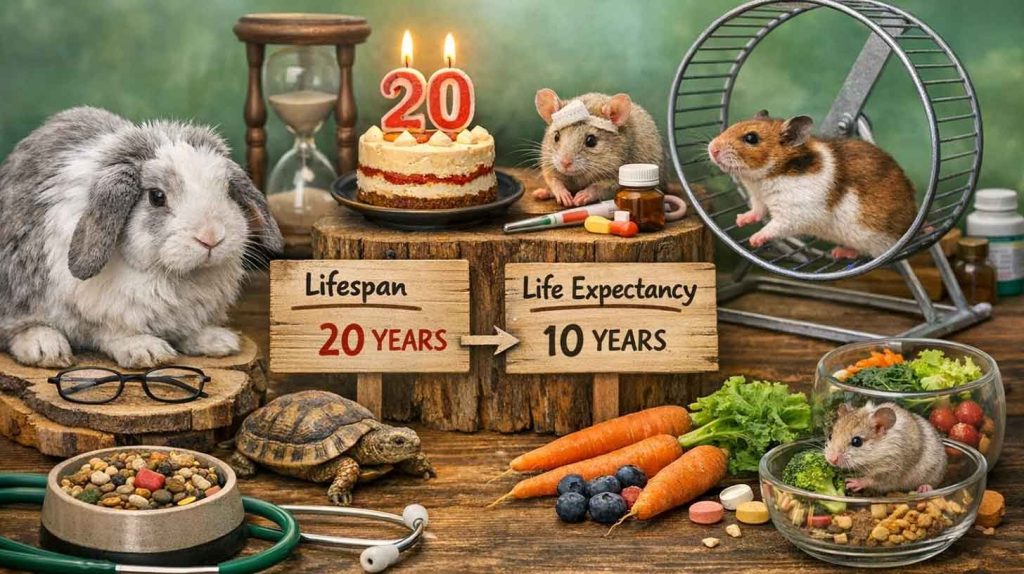
Lifespan is the total number of years a small pet can live as a species, but the life expectancy is the predictability of their age based on their health, care, and diet.
Example: A pet that can live 20 years maximum may only live 10 years due to any incidence or health issues.
In this guide, we will talk about their average natural life span and a hint of how owners can extend their life expectancy.
Key Factors Influencing Small Animal Lifespan
There are several factors that affect the lifespan of small pets. Some major points have been explained below:
- Genetics and Breeding: Genetics play an integral role, as some mixed-breed small pets may inherit some diseases that can affect their lives. Usually, the mixed-breed animals live longer due to their genetic diversity.
- Diet and Nutrition: A small pet with a balanced diet will live longer, as per their life span, but those with poor nutrition may get ill with chronic diseases.
- Veterinary Care: Small pets that get vaccinated, neutered/spayed, and visit their vet regularly can detect illnesses early and prevent infections that could reduce their life expectancy.
- Environmental Safety: Small pets that live in human captivity with proper care live longer than those in their natural wild habitat. Their lifespan increases when they are secured from predators, extreme weather, and environmental hazards.
- Lifestyle and Exercise: Regular mental and physical stimulation helps small pets with their physical and mental health, increasing their lifespan.
By focusing on keeping these factors in consideration, one can increase both the life expectancy and lifespan of their small pet. Also, ensuring a longer, healthier, and happier life for their furry, scaled, or feathered friends.
Understanding Small Pet Aging Stages Across Species and Body Size
The lifespan of a pet can be understood well if we acknowledge their care throughout their different life stages, like: Baby, Adult, and Senior age.

When it comes to small pets, some reach their adulthood in a few weeks, while some may take months. Each stage of the small pets requires different nutrition, healthcare, and exercise to increase their life expectancy. By understanding these needs, you, as a pet parent, can help your pet enjoy a long and healthy life.
In the sections below, we’ll break down the baby, adult, and senior stages for small pets, highlighting key behaviors, common health issues, and practical tips for extending their lifespan.
You will not just get to know the lifespan years of your favorite pet, but also get to know how you can keep them healthy for each stage of their life.
Baby Stage in Small Pets: Rapid Growth, Early Health Issues, and Survival Risks
At this stage, most small pets are growing rapidly, they have high energy, a developing immune system, and are learning social behavior.
At this stage, they are highly vulnerable to infections and early life mortality. Some small pets, like guinea pigs, can also be sensitive to diet deficiencies.
To properly care for your small pet at this stage of their age:
- Watch for any unusual behaviors like lethargy, vomiting, or being unable to walk.
- Since babies are highly sensitive to temperatures and at risk of predators, ensure to provide them with proper temperatures and enclosures that keep them safe.
- Interact with them gently from this age to slowly introduce yourself, and train them for a gentle temperament and reduced stress upon human interactions.
- Make sure their bedding is clean to prevent them from getting diseases.
Adult Stage: Peak Health, Social Interaction, and Stable Life Expectancies
This is the stage of life where the small pets are at peak health and are more social with increased activity and reproductive maturity.

- They need a balanced diet to prevent them from obesity, good dental care, exercise, and enrichment for their mental and physical health.
- Regular veterinary checkups are also important for them at this stage.
- Provide them with proper interaction and enrichment to prevent stress-related health issues.
- The small pets that are nocturnal must not be forced to engage in daytime activities, as it can cause stress and impact their lifespan.
- Get them neutered/spayed and provide exercise structures.
Senior Stage: When Do Small Pets Become Seniors and How Aging Signs Appear
The senior stage of life is different for different small pets.

- Hamsters & mice: 1.5–2 years
- Rats: 2–3 years
- Guinea pigs: 4–5 years
- Rabbits: 6–7 years
- Reptiles (e.g., Leopard geckos, Bearded dragons): 10+ years
- They have decreased metabolism, slow activity, cognitive decline, and lower immunity.
- When they age, provide them with soft bedding, ramps, and low-effort feeding areas for stress-free movement and resting.
- Provide them with supplements and a balanced nutritional diet to control obesity and dietary issues.
- Keep up with a regular testing and veterinary visiting routine for early detection of any small pet illnesses.
- Provide gentle care and interaction to lower their stress.
Why 5 Years Is the Most Important Divide in Small Pet Lifespan
When we talk about the life span of small pets, the mark of 5 years can be thought of as a practical dividing line, because there are many small pet species that complete their lifespan during this time.
- Small pets that live for under five years have compressed life stages where their baby, adult, and senior ages pass quickly. These are ideal for first-time owners, being a not-so-long commitment, but these pets require consistent care and health monitoring.
- The small pets that live more than five years usually have elongated life stages, show slow aging patterns, and come with a long-term commitment and responsibility for the owners.
Below, we are giving the lifespan chart of the 20 most popular small pets that fall under both of these categories.
Small Pets That Live Under 5 Years: Short Lifespan Pets for Beginners
Small pets that live for under five years are usually considered low-maintenance by people, but this is not true. A shorter lifespan means they have a quick transition for each life stage and would require proper observation and maintenance for each life stage.
They might be a good choice for beginners and be the best small pets for kids to learn responsibility, but the focus for these pets should be on providing them with exercise, diet, bedding, and medical care based on each life stage’s requirements.
Pet Lifespan Comparison Chart: Small Pets That Live Under 5 Years
| Small Pet Species | Average Lifespan | Realistic Life Expectancy With Proper Care | Baby Stage Care to Improve Survival | Adult Stage Care to Maintain Health | Senior Stage Care to Extend Life |
| Syrian Hamster | 2 to 3 years | 2.5 to 3 years | Stable temperature, protein-rich starter diet, clean bedding | Proper wheel size, low stress handling, dental wear | Soft food, reduced climbing, arthritis monitoring |
| Dwarf Hamster | 1.5 to 2.5 years | 2 to 2.5 years | Escape-proof enclosure, warmth, gentle handling | Daily enrichment, balanced seed mix, clean cage | Easy access food, watch weight loss |
| Mouse | 1 to 3 years | 2 to 3 years | Warm nesting, frequent feeding, social pairing | Clean habitat, mental stimulation, avoid overcrowding | Monitor tumors, softer bedding |
| Rat | 2 to 3 years | 2.5 to 3 years | Early socialization, protein-balanced diet | Large cage, social interaction, exercise | Tumor checks, joint support |
| Gerbil | 2 to 4 years | 3 to 4 years | Deep bedding, warmth, paired housing | Burrowing space, chewing toys | Lower platforms, joint care |
| Fancy Tetra Fish | 3 to 5 years | 4 to 5 years | Stable water parameters, low stocking | Regular water changes, group schooling | Reduced feeding, disease monitoring |
| Betta Fish | 3 to 5 years | 4 to 5 years | Heated tank, gentle filtration | Clean water, varied diet | Lower flow, easy surface access |
| African Dwarf Frog | Up to 5 years | 4 to 5 years | Shallow water, soft feeding | Clean tank, avoid aggressive tank mates | Monitor buoyancy, appetite |
| Green Anole | 4 to 6 years | Around 5 years | UVB lighting, live insects | Vertical space, hydration | Reduced handling, joint support |
| Tarantula | 2 to 4 years | 3 to 5 years | Stable humidity, minimal disturbance | Clean enclosure, proper feeding | Reduced feeding, low-stress environment |
Small Pets That Live Over 5 Years: Long-Lived Small Pets and Long-Term Small Pet Commitment
Some small pets live longer than five years, and their lifespans can even go beyond a decade. These pets require long-term commitment from their owners and also require major changes in their medical, dietary, and enrichment-related needs.
Pet Lifespan Comparison Chart: Small Pets That Live More Than 5 Years
| Small Pet Species | Average Lifespan | Realistic Life Expectancy With Proper Care | Baby Stage Care to Improve Survival | Adult Stage Care to Maintain Health | Senior Stage Care to Extend Life |
| Guinea Pig | 5 to 8 years | 6 to 8 years | Vitamin C intake, warm housing | Daily hay, social companionship | Dental checks, softer foods |
| Holland Lop Rabbit | 8 to 10 years | 9 to 12 years indoors | Gentle handling, proper hay diet | Exercise time, dental monitoring | Joint support, litter access |
| Mini Rex Rabbit | 8 to 10 years | 9 to 11 years | Early socialization, safe flooring | Balanced greens, grooming | Arthritis care, soft bedding |
| Lionhead Rabbit | 7 to 10 years | 8 to 10 years | Mane grooming training, diet balance | Mental stimulation, grooming | Reduced grooming stress, dental care |
| Chinchilla | 10 to 20 years | 12 to 20 years | Cool environment, dust baths | Chewing toys, temperature control | Mobility support, low stress |
| Hermit Crab | 10 to 30 years | 15 to 30 years | Proper shells, humidity control | Group housing, calcium access | Stable environment, minimal disturbance |
| Leopard Gecko | 15 to 20 years | 18 to 20 years | Proper calcium and UVB | Consistent feeding, clean enclosure | Lower feeding frequency, joint care |
| Crested Gecko | 15 to 20 years | 18 to 20 years | Humidity balance, gentle feeding | Vertical habitat, diet rotation | Easy climbing access |
| Corn Snake | 15 to 20 years | 18 to 22 years | Secure enclosure, correct temps | Stable feeding schedule | Reduced feeding, health monitoring |
| Bearded Dragon | 10 to 15 years | 12 to 15 years | UVB exposure, calcium | Balanced diet, basking access | Joint care, softer food options |
Alarming Symptoms in Small Pets That Can Shorten Their Lifespan
Even the healthiest small pets can experience health issues that shorten their lifespan. Recognizing early warning signs for different life expectancies helps pet parents take timely action to prevent serious illnesses and improve life expectancy.
Symptoms in Small Pets With Lifespan Under 5 Years
Below are some key symptoms that you must watch out for early detection of issues that could reduce the life expectancy of your small pet that lives under 5 years.

- Lethargy or unusual behavior.
- Vomiting or diarrhea.
- Rapid weight loss or failure to thrive.
- Respiratory distress, including sneezing, wheezing, and labored breathing.
- Poor coat/fur condition shows vitamin deficiencies or skin diseases.
- Sudden inactivity or paralysis can be due to injury or neurological problems.
- Dental issues like overgrown teeth.
Symptoms in Small Pets With Lifespan Over 5 Years
Key symptoms to watch for include:

- Slow or irregular movement. It indicates joint disease, arthritis, or obesity.
- Loss of appetite. It can cause malnutrition.
- Sudden changes in behavior, such as stress, interaction changes, or illness.
- Respiratory signs such as sneezing or abnormal breathing in older pets.
- Dental problems are especially prevalent in rabbits, guinea pigs, and rodents.
- Skin or shell changes showfungal infections, parasites, or dehydration.
- Sudden weight change shows metabolic or gastrointestinal issues.
- Changes in hearing and vision indicate aging or underlying disease.
Final Remarks: Matching Small Pet Lifespan With Lifestyle, Space, and Commitment
When it comes to choosing a small pet, their size, cuteness, or cost is not the only factor to consider. Their lifespan is one important factor because it decides how much time, care, emotional commitment, and responsibility you owe to them.
With proper knowledge of their life expectancy and lifespan, you know how long you are committing to your small furry friend, and how you have to fit in their lifestyle rather than just making them adjust to yours.
- If you are a beginner, then choose small pets under five years, but know that this short lifespan comes with quick life cycles; they need proper medical and dietary care.
- But if you want to have a pet that stays with you long-term, then choose a small pet that lives more than five years, but consider special care during their senior years, as they will need more mobility, nutrition with additional supplements, and stress reduction with regular vet visits.
The small pet lifespan chart present in this blog will help you to understand the small pets’ aging stages and the symptoms of concern for each age cycle, so you can provide them with a quality life and create a beautiful experience with them.
For more guidance, readers can read our related resources on small pet diseases, temperament guides, and how often a pet should visit a vet to ensure their chosen companion lives a longer, healthier, and happier life.
Frequently Asked Questions
How long do small pets live on average?
Lifespan differs for each small pet based on their genetics, and their life expectancy relies on factors like their nutritional and health care. The average small pet lifespan is between 2 and ten years, and some live longer. Short-lived small pets live from 2 to 5 years. Some small pets live longer and stay with you for ten to twenty years, like rabbits, reptiles, and chinchillas.
Which small pets live for under 5 years?
Small pets that typically live under 5 years include hamsters, mice, rats, gerbils, betta fish, tetra fish, African dwarf frogs, and some small lizards.
Which small pets live the longest?
The longest-living small pets include chinchillas, hermit crabs, leopard geckos, crested geckos, corn snakes, bearded dragons, and rabbits. Many of these live 10 to 20 years or more.
When do small pets become seniors?
This totally depends on their life span. The small pets that live less than five years can enter senior years as early as 18 months. Those that live more than 5 years may enter senior age between 5 and 7 years, and some small pets like reptiles that live longer may show senior aging signs at ten years or later.
Can small pets live longer than their average lifespan?
Yes, small pets can live longer than their average lifespan when provided with proper care.