

Deciding whether cats should stay indoors or outdoors is one of the most common and emotionally charged questions a pet owner faces. Some believe the outdoors are better for a cat’s happiness, while others think keeping the pet indoors is important for its safety and longevity.
However, the truth is more nuanced. This guide walks you through the real differences between indoor vs outdoor cats, including health, enrichment, behavior, and life expectancy. By the end of it, you will be able to make an informed decision that suits your cat’s needs and your lifestyle.
30-Second Summary
- Indoor cats are generally safer and live longer, as they are less exposed to risks from traffic, diseases, predators, and injuries.
- Outdoor cats enjoy more freedom and natural stimulation, but face serious health, safety, and environmental risks.
- Proper enrichment is important for indoor cats to prevent boredom, obesity, and behavioral issues.
- A hybrid approach, including catios, harness training, and supervised outings, offers a balanced solution for many households.
Understanding the Two Cat Lifestyles
Let’s see how indoor and outdoor cats differ.
What is an Indoor Cat?
An indoor cat lives entirely indoors and does not roam outdoors. Its entertainment, safety, food, and enrichment are completely managed by its owner. Many pet owners prioritize this lifestyle because it reduces the risks related to diseases, traffic, and injury.

This lifestyle is particularly common in urban areas and is also widely recommended by veterinarians due to significant indoor safety and health benefits.
What is an Outdoor Cat?
Outdoor cats have partial or unrestricted access to the outdoors. Some roam freely, while others live partially outside with food and shelter provided. This lifestyle is mostly of farm cats, barn cats, and free-roaming neighborhood cats.

Outdoor access allows cats to explore the natural environment and exercise. However, this lifestyle also comes with many risks, like traffic and diseases.
Indoor Cat Benefits: Safety, Health, and Longevity
Indoor cats face fewer daily threats. They are far less likely to face
- Animal attacks
- Road accidents
- Exposure to harmful substances and toxins
- Injuries from fights with other cats
Indoor cats also tend to live longer, as they are not exposed to these dangers. As they live in a controlled environment, pet owners can easily monitor changes in their behavior, appetite, and health.
Moreover, indoor cats develop a stronger bond with their owners, which leads to a more fulfilling companionship.
Indoor Cat Behavioral Issues and Boredom
The main concern with indoor cats is boredom. Without proper enrichment, these cats develop behavior issues, such as

- Overeating
- Destructive scratching
- Anxiety and stress
The solution for this issue is to provide them with proper indoor enrichment.
Another concern is obesity. If these cats do not get enough stimulation at home, they can overeat and become overweight, which can lead to other illnesses such as heart issues and diabetes.
Indoor Cat Enrichment and Stimulation
To ensure your indoor cat remains content and healthy, you need to provide the following.

- Vertical Space: Cats instinctively love to climb and perch. You should arrange cat trees, shelves, and window perches.
- Toys: Interactive toys encourage your cat to hunt and chase, reducing its boredom.
- Social Interaction: Spend quality time with your feline friend through playing, grooming, and cuddling to strengthen the bond.
- Scratching Surfaces: Give them scratching posts and pads to fulfil their natural urges and save your furniture.
- Hideaways: Cats like to retreat and feel secure. Make sure to give them a cozy spot, such as a cat cave or a cardboard box.
- Diet Monitoring: Always measure food portions and give a balanced diet to your cat, tailored to its needs.
- Catio: It is a safe compromise for owners who want their cats to experience the outside world without danger. You can attach it to a window, balcony, or backyard and let your cat enjoy fresh air, sunlight, and stimulation safely.
Outdoor Cats: Freedom, Exercise, and Natural Behavior
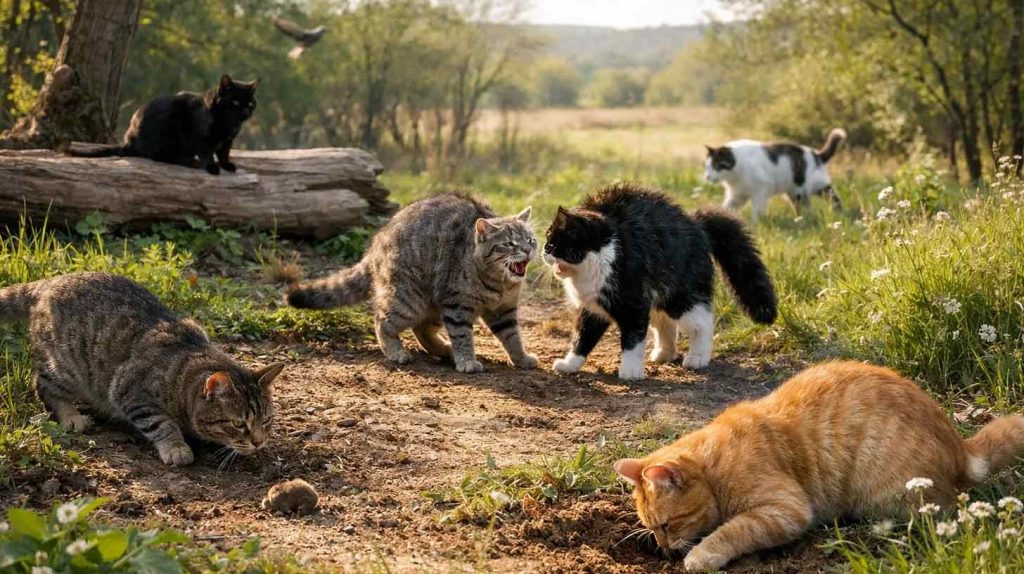
- Freedom: Outdoor cats have the freedom to explore nature, which fosters a sense of autonomy and satisfaction.
- Natural Behavior: Cats are hunters and explorers. So being outside allows them to tap into their natural urges.
- Stimulation: Outdoor cats easily enjoy and burn more calories without the need for interactive toys and human attention.
- Territory: Cats establish their own territories, which often overlap with those of other cats. These encounters include face-offs, yowling, and arched backs, which are normal feline behavior.
- No Litter Trays: You do not need to clean any litter boxes, as an outdoor cat takes care of her toilet business outside.
Outdoor Cat Risks and Hazards
While outdoor cats enjoy natural exploration, this lifestyle also has multiple dangers.
- Traffic: Outdoor cats can be hit by cars, leading to injury and even death.
- Diseases: These cats are more exposed to contracting serious diseases, such as feline infectious peritonitis, feline leukemia, and feline immunodeficiency virus.
- Parasites: Parasites, like fleas, ticks, and worms, are more common in these cats and can lead to health issues.
- Predators: Outdoor cats are at risk of falling prey to larger animals, like coyotes and birds of prey.
- Fights: Conflicts with other cats (particularly related to territories) can lead to fights and injuries.
Impact of Outdoor Cats on Wildlife
Outdoor cats have a significantly negative impact on local ecosystems. Birds, small mammals, and reptiles are particularly vulnerable.
These cats kill more than 2.4 billion birds every year in the United States, becoming the top direct cause of bird mortality in the US. This environmental impact has led many veterinarians and conservationists to advocate for cats staying indoors and for supervised outdoor access.
How to Introduce Your Cat to the Outdoors
If you decide to let your feline companion outside, consider the following steps for its safety.
- Gradual Introduction: Keep an eye on your cat’s initial outdoor excursions and provide it with a safe outdoor space, such as a catio.
- Microchip and Collar: Make sure that your cat has a microchip and a breakaway collar with your contact information.
- Parasite Prevention: Use flea, tick, and worm treatments regularly to ensure there is no risk of infestation.
- Proper Vaccination: Keep your feline’s vaccinations current to ensure it does not contract any disease.
- Establish Boundaries: Train your pet to stay within the boundaries of your property to reduce any chances of hazards.
- Keep it Indoors at Night: Keep your cat indoors at night because that is the time when traffic and predators are more prevalent.
A Hybrid Approach for Your Cat
A mix of indoor and outdoor approach is best for your cat, as it enjoys natural exploration but with reduced risks associated with an unsupervised lifestyle.
Harness Training
Follow the following steps to start the harness training.

- Introduce the harness: Let your cat sniff and become familiar with the harness before putting it on.
- Begin indoors: Start by putting the harness on your cat indoors to make them familiar with the feel of it.
- Reinforce with treats: Praise your cat and encourage its cooperation by offering treats.
- Gradually introduce: Once your pet is comfortable with the harness, start walking with them outside.
Supervised Outings
When you train your cat to wear a harness successfully, you can take it outside under your supervision.
- Start by choosing a calm and quiet area to reduce stress for the cat.
- Keep all your initial outings short and increase them gradually for its comfort.
- Keep an eye on your cat’s behavior outside to see if it is enjoying the experience.
- Be patient in this new routine because some cats take longer to adjust to a new lifestyle.
Choosing Between Indoor and Outdoor Cats
Choosing whether your cat should live indoors or have outdoor access depends on some important factors.

- A cat’s age and personality matter. Kittens and senior cats usually do better indoors, while active adults may like more stimulation.
- Health conditions can also limit your cats’ outdoor access, as can your living environment, such as a heavily trafficked area that is not safe for outdoor access.
- Another important factor is your ability to provide indoor enrichment through play, climbing spaces, and mental stimulation.
Should Cats be Indoor or Outdoor?
There is no universal answer to that. However, for most pet owners, an indoor lifestyle with proper enrichment or supervised outdoor time is the best way to ensure their cats’ safety and mental stimulation.
Conclusion: Making the Right Choice for Your Cat
The indoor vs outdoor cats debate is not about right or wrong. It is all about responsibility. As a pet owner, you need to understand the benefits, risks, and alternatives to make the right decision that prioritizes yoru cats’ health, happiness, and safety.
With creativity, enrichment, and thoughtful care, cats care guide can thrive indoors while also enjoying the world around them.
To learn more about pet care, feel free to visit Pet Guides.
FAQs
Can an Outdoor Cat be Transitioned to Indoor Living Safely?
Yes, many outdoor cats can adapt to indoor life easily through gradual transitions, increased enrichment, and patience. The process is particularly easy for younger cats or those who are already comfortable with human interaction.
Can Apartment Cats Safely Experience the Outdoors?
Yes, catios, leash training, and window enclosures allow apartment cats to enjoy outdoor experiences without exposure to common outdoor hazards.
Do Outdoor Cats Recognize Their Owners as Caregivers?
Yes, outdoor cats often form strong bonds with caregivers, particularly when you take care of their food, shelter, and medical necessities consistently.
Is it Wrong to keep a Cat indoors all the time?
No, when you provide them with stimulation, social interaction, and enrichment, indoor cats can live full, happy lives without experiencing stress or deprivation.