

Adding a beautiful feline friend to your family is exciting. However, which cat type is best for your house: short-haired or long-haired? If you can’t make this decision, you have come to the right place.
In this guide, let’s take a deep dive into the characteristics of long-hair vs short-hair cats, their different grooming needs, maintenance tips, and pros and cons to see which type suits your lifestyle the best.
30-Second Summary
Both long-haired vs short-haired cats have their grooming needs. While both shed almost with the same frequency, long-haired cats are more susceptible to matting and hairballs than short-haired breeds.
Owners need to groom their cat regularly to avoid fur buildup and matting. Use proper grooming tools suitable for each cat type. Moreover, people with allergies should take cat grooming seriously, vacuum their house, and use air purifiers.
Understanding Cat Coat Length Differences
Before we compare the two types, it is important to understand the differences in cats’ coat lengths. A feline’s coat is determined by its genetics, while nutrition and health play a role in the coat’s quality.

Cats are typically categorized into three groups.
- Short-haired
- Long-haired
- Medium-haired
The coat type determines how much a cat sheds, how prone it is to matting, and how often it needs grooming. Long-haired cats often have double coats that trap all the loose fur. Short-haired cats have coats that are close to their bodies, and they shed more subtly.
What Defines a Long-Haired Cat?
Long-haired cats have long, fluffy, and short coats, which are the main factor that separates them from short-haired cats.

These cats require more grooming to avoid mats and tangles. If the coat becomes extremely matted, they need a vet or a professional groomer to trim the fur.
What Defines a Short-Haired Cat?
Short-haired cats have short and sleek coats that can be easily maintained. They do not require daily grooming, as they do not have the problem of matting and tangles. They also shed less; however, it depends on the coat’s quality and the overall lifestyle of the cat.

With these cats, you do not need to brush them every day, and you won’t see long, loose hair flowing in your house.
Long-Haired Cat Breeds
Take a look at some of the long-haired cat breeds.

- Ragdoll
- Persian
- Siberian
- British Longhair
- Balinese
- Maine Coon
- Himalayan
- Turkish Angora
Short-Haired Cat Breeds
Here are some common short-haired cat breeds.

- Siamese
- British Shorthair
- American Shorthair
- Exotic Shorthair
- Devon Rex
- Bombay
- Bengal
- Oriental Shorthair
Cat Shedding Comparison
If you think short-haired cat breeds shed less than long-haired ones, you are mistaken. Long-haired breeds and short-haired cats both shed a lot. However, long-haired cats tend to shed more than the short-haired ones, so consider this factor if you have allergies.
Grooming Needs: Long Hair vs Short Hair Cats
The grooming needs of a cat depend entirely on its hair length. It is easier with short-haired ones, but you might need to take more care of your long-haired feline.

Long-Haired Cat Grooming
With a long-haired cat, matting can be a nightmare for the owners. The sign of matting is when your cat’s tongue gets stuck in the fur when it is trying to groom itself.
This is when you need to step in and groom with a detangling brush. Your furry friend will love it when it can lick itself without the knots.
Short-Haired Cat Care
You do not have to brush your short-haired cat every day. But for bonding, it can be great. Use a simple pet brush to spend time with your pet while also reducing shedding.
However, keep in mind that these cats shed more. If your house is carpeted, you need to vacuum it almost every day to keep the fur off your furniture. While it is important to bathe short-haired felines, you do not need to do it as often as with long-haired ones.
Grooming Tools for Long vs Short Hair Cats
Grooming tools are necessary for both coat types.

Long-haired Cats
For long-haired cats, you need
- Slicker brush to smooth any tangles and remove loose hairs without damaging the topcoat.
- Deshedding rake (like a furminator) to remove undercoat fur to reduce mats and shedding.
- A wide-toothed comb to use after brushing to find out any hidden mats, particularly in fluffy areas like the tail.
- Dematting tool to break apart stubborn and large mats.
Short-Haired Cats
For short-haired cats, you can use
- Rubber glove brush to gently massage the skin and remove loose fur.
- Bristle brush to get rid of surface hair and smooth the topcoat.
- Flea comb to catch any dander, fleas, and smaller tangles.
- Shedding comb with closer teeth for shorter fur to pull out undercoat hair.
Universal Tools for Both
- Get a cat-safe pair of scissors for trimming hair around sensitive areas or stubborn mats.
- Purchase grooming wipes and shampoo for spot cleaning and full baths.
Cat Hairball Issues: Long vs Short Hair Felines
A hairball is formed when your cat swallows loose fur during grooming, which builds up in the digestive tract. Hairballs do not come out of a cat’s body normally (passing through the intestines); instead, they are expelled through the mouth.

Cats basically use their tongues for grooming, and this causes them to swallow their loose fur. Cats who groom a lot have a higher risk of hairballs.
Hairball issues are also determined by the length of a cat’s fur. These issues are more common in long-haired breeds because their grooming sessions often involve more fur. Short-haired cats may not shed as heavily, but they still swallow hair in their grooming sessions. Prevention is important for both types.
Signs your Cat has a Hairball
Here are some signs that your cat has a hairball in its stomach.
- It repeatedly gags or retches without expelling the hairball.
- It shows less interest in food.
- It shows signs of constipation or changed litter habits.
- It is lethargic or lacks energy.
- It obsessively grooms or licks itself.
Preventing Hairballs at Home

- Brush your long-haired cat every day and your short-haired cat weekly to reduce the amount of fur they swallow.
- Give them a proper diet to support their digestive health and minimize hairball formation.
- Make sure that your cat drinks more water to prevent hair collection in the stomach.
- If your cat licks excessively, it might be bored or stressed. Give it toys, scratching posts, and climbing structures to reduce stress-related grooming.
Cat Allergy and Dander
Many people believe that having a short-haired cat is better for allergies than a long-haired one. However, the truth is more complex. Allergies are not because of your cat’s fur; it is the dander that is behind your sneezes and sniffles.
Dander is the dead skin cells trapped in your cat’s coat. It contains a protein (Fel d 1) that causes allergies in some people. Every cat (whether short-haired or long-haired) produces dander, but not everyone is allergic to it.
To reduce your allergies, make sure that your cat is groomed regularly. If your pet does not like at-home grooming, take it to an expert groomer. You should also use air purifiers to keep your home’s air clean.
Appearance and Temperament: Does Hair Length Matter?
Many people associate fluffy cats with calm personalities and sleek cats with high energy, but this is not always accurate.
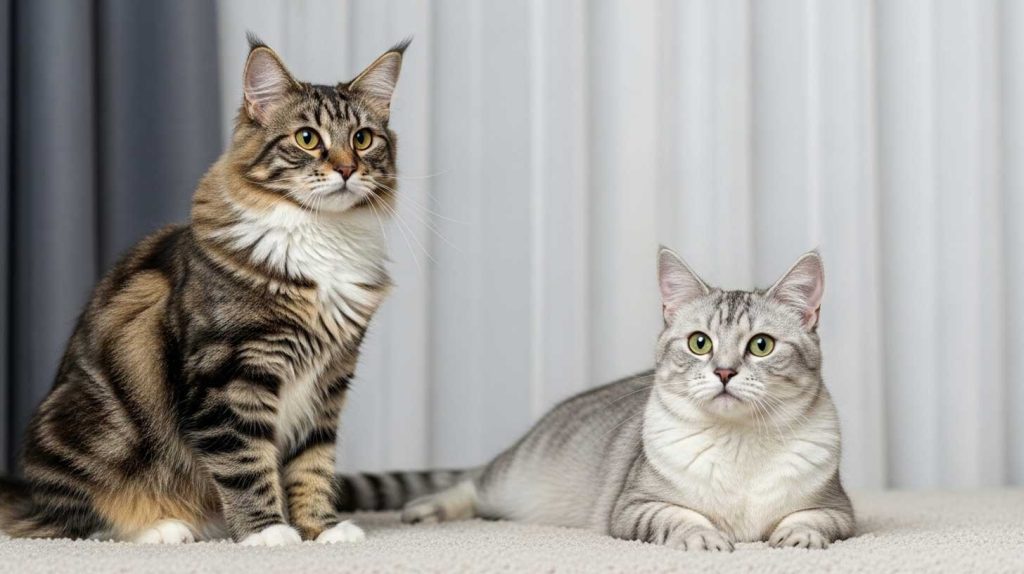
A cat’s appearance or hair length is not linked to its temperament. Personality depends more on genetics, breed, and socialization than fur length. A Maine Coon may be more energetic, while a British Shorthair can be laid back and calm.
Choosing Between Long and Short-Haired Cats
You need to consider your lifestyle when choosing between long- and short-haired breeds. Ask yourself
- How much time can you dedicate to grooming?
- Are you sensitive to cat hair or dander?
- Do you prefer appearance or convenience?
- Are you prepared for future grooming costs?
Your answers will show you the right fit.
- If you have a busy schedule, short-haired cats may be easier to care for.
- If you enjoy grooming and bonding time, long-haired cats are perfect.
- If you live in a small apartment, both can be great with proper care.
- If you have a family with children, temperament matters more than coat.
Pros and Cons of Both Breeds
| Cat Type | Pros | Cons |
| Long-Haired Cats | Visually striking and fluffy appearance; coats often feel very soft; many breeds are calm and affectionate; cold climates are better tolerated | Require frequent grooming; prone to matting and tangles; higher chance of hairballs; more visible shedding around the home |
| Short-Haired Cats | Low grooming requirements; easier coat maintenance; fewer hairball issues; better suited for busy owners and first-time cat parents | Less dramatic appearance; shedding still occurs year-round; coats may feel less plush compared to long-haired cats |
Final Verdict: Long-Hair or Short-Hair?
There is no universally “better” option when it comes to long-hair vs short-hair cats. The right feline type for you depends entirely on your lifestyle, time commitment, and personal preferences.
Long-haired cats look beautiful but need more grooming. Short-haired cats are easy to take care of and need less grooming.
By understanding the care needs of each breed and how they fit into your life, you can make a confident decision to choose a feline companion that brings true joy into your home.
Ready to learn more about cats? Visit Pet Guides for more comprehensive blogs.
FAQs
Are Long-haired Cats Harder to Keep Clean Indoors?
Yes, long-haired cats are generally harder to keep clean indoors because their thick fur can trap dust, food, and litter. Therefore, regular brushing and hygiene trims are necessary to keep the coat clean.
Which Cat Coat Type is Better for Hot or Warm Climates?
Short-haired cats are usually more comfortable in hot climates because their short coat helps dissipate heat. However, long-haired cats can be comfortable in hot weather too, but they need proper grooming and access to cool areas.
Which Cat Coat is Best for First-time Owners?
Short-haired cats are generally better for first-time owners because they are easier to groom and less prone to matting.
Do Long-Haired Cats Shed All Year-Round?
Yes, long-haired cats shed all year, but shedding increases significantly during seasonal changes. Regular grooming is important to control fur buildup.
Are Short-Haired Cats Better for People with Allergies or Asthma?
Short-haired cats can be easier to manage for people with allergies. However, no cat is truly hypoallergenic. Regular grooming and home cleanliness matter more than the cat’s coat length alone.